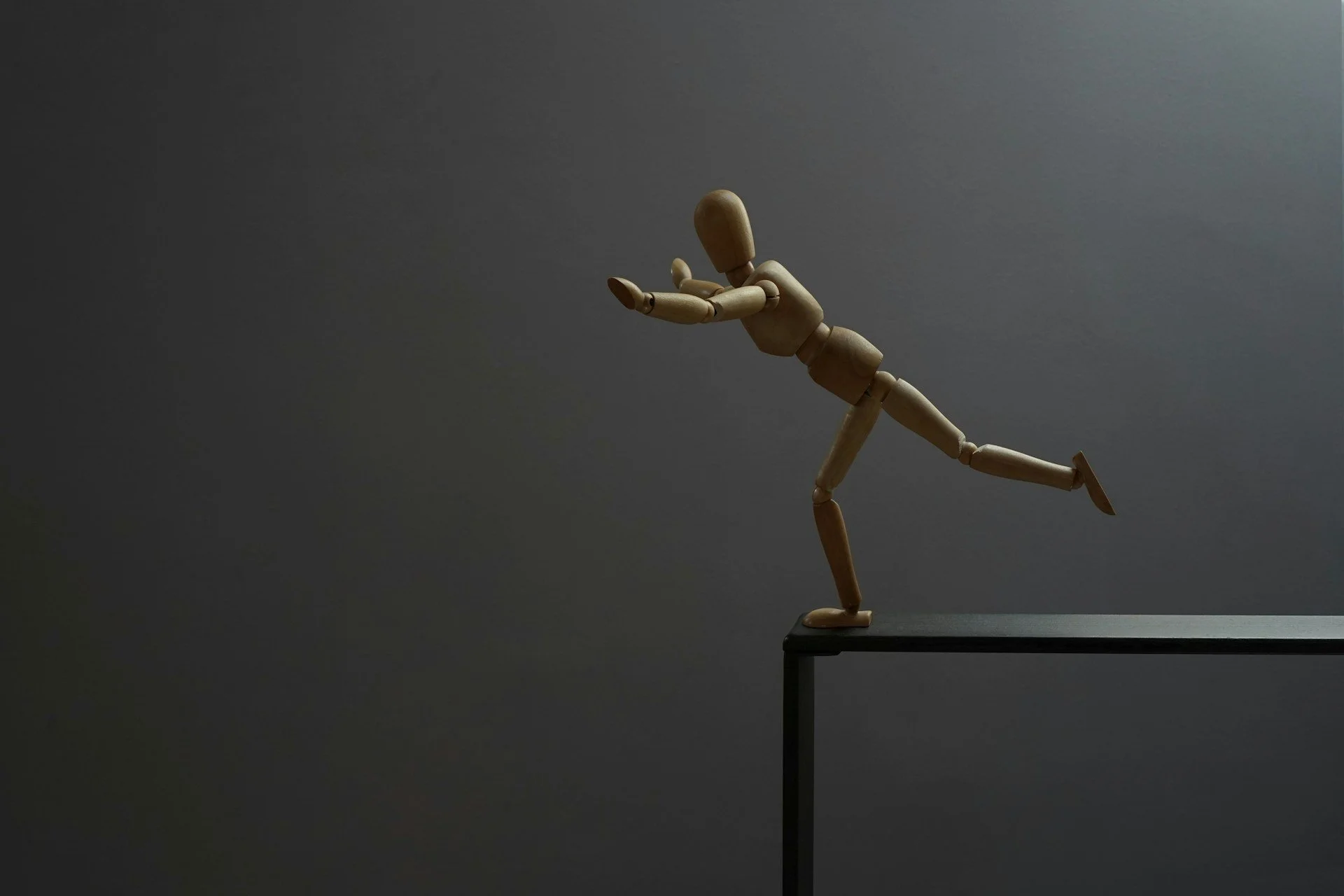
Untangle Emotional Stuckness to Stop Survival Mode Habits
Welcome to the Satiated Podcast, where we explore physical and emotional hunger, satiation, and healing your relationship with your food and body. I'm your host, Stephanie Mara Fox, your somatic nutritional counselor.
Today, I talk about an intimate example of what I'm currently navigating in my life that I wanted to share a bit more about before you hear about it in this episode. We all have stories we tell ourselves. Things like who am I to do this? Do I know enough? Am I enough? Who would listen to me? Could I live life entirely differently? I'm sure you could add to this list of questions you also agonize over. You have heard from me here many times that all practitioners need support too and yet sometimes it is hard for me to share honestly where I'm at and what I'm struggling with. I worry about how my struggles might be perceived. I know that many of my clients listen to this podcast, hi and see you in session soon, and I don't want anyone to feel like they need to worry about me and whatever it is that I'm navigating. And I'm used to navigating everything alone and just putting more and more onto my plate. Hey, we teach what we need to learn right? I'm often talking with those I work with about reaching out more and getting comfortable receiving support. For today's episode, you'll hear a personal work example that I've been navigating. I share more about how I've been trying to launch my Somatic Eating® Coach Certification Training and how much has been coming up for me in this process. Many of you started reaching out probably about 5 years ago, sharing with me how you'd like to learn more about Somatic Eating® from a professional standpoint. I was so touched how many of you had reached out that I started to take it seriously. Two summers ago, I started getting serious about creating it and began creating outlines. I really thought I could create the whole thing in one summer. This did not happen. So a whole year passes and I'm like alright I need some help to get this moving and I hire a mentor to set some goals and get this thing moving forward. I'm now getting closer and believe I could finally launch the certification in 2027 and all the fears have started to become louder the closer the date gets. You'll have to listen to the podcast about how Jane guides me through this moment.
Jane Garnett, LMFT, is an Oxford-educated, LA-based speaker, psychotherapist, EMDR practitioner, former Hollywood producer, and author of This Time with Feeling (May 12, 2026). With nearly 20 years in private practice, her work often centers on high-functioning individuals whose lives look successful on the outside but are shaped by patterns of emotional disconnection, anxiety, or underlying dissatisfaction. Before becoming a therapist, Jane built a career in Hollywood, helping launch Appian Way with Leonardo DiCaprio and producing films including The Illusionist. That background continues to inform her perspective on the stories people inherit and perform— particularly around love, success, and identity. Her debut book, This Time with Feeling, is a psychological, sexy, and darkly funny memoir that traces her departure from a seemingly perfect life— complete with a high-powered Hollywood career, a picture-perfect marriage, and many of the external markers of success she once believed would make her feel safe, loved, and happy. The book explores what it means to dismantle internalized narratives around love, stop performing a life, and reclaim a more authentic, embodied self. We chat about Jane's journey to discovery EMDR, a new perspective to the experience of stuckness, rewriting your story, the cultural obsession with control, the importance of feeling the body for change to occur, the myth of arriving at a problem free life, waking up to life's deeper questions, and practices to enter into curiosity and compassion.
As always, ways you can support the Satiated podcast include: please consider leaving a review anywhere that you listen to podcasts to help others find the show. You can also check out all of my affiliate links, join Satiated+ and donate a few dollars to the show, or check out working with me 1:1 or in any of my programs. I have self paced programs and my three month live Somatic Eating® Program. The next class will be in May. All links are in the show notes. Now, welcome Jane! I am really excited to have you here on the podcast and just talking about an EMDR perspective to stuckness, and you know all the other things that we're going to talk about today. But first, I'm just curious if you could let listeners know, like a little bit about you and how you got into this work that you're doing today.
Jane Garnett 05:34
Yeah, absolutely. Therapy was my second career. My first was in the film business, but I started being a therapist about 20 years ago, and I loved it on the one hand because I kind of was a natural for reasons I didn't know yet who I was in the family system. So I was like, oh, this is easy compared to being in the film business. And I love talking to people. I love the intimacy. I love that it was working, but I felt that something was missing, and that sense that something was missing, that it wasn't quite alive enough, the work. It was hard for me to know: is this my, you know, is this a clinical perspective on mental health? Is this an issue I haven't dealt with in my own life yet? You know, why am I here essentially? And I felt I was playing a bit of a role that I didn't know how to get out of. I felt like I was a bit of a man in a white coat, and that people were looking to me for these answers, and I could give them. But again, something didn't feel quite right in the process. So I went on my own kind of rogue research journey, which involved a lot of plant medicine, shamanism, Buddhism, somatic healing, weird mystical enterprises. You know?
Stephanie Mara 06:49
Totally, totally.
Jane Garnett 06:52
I went on a seeker's binge, and meanwhile, I was in in this more sort of abstemious. I'm realizing these kind of slightly relate to eating categories. This more abstemious path where I had my, you know, polite practice, and I was earning good money, and I was capitalizing on my Oxford education and my English accent. It was all kind of quote unquote working. And as I was going about my personal journey, I was realizing there were these aspects of life where I was a bit kind of locked in performance, and as I was digging around, you know, as as one does through these deep dives, what was really coming on was kind of my very strong, as it turns out, life force, which is very vibrant, and I felt like okay, I'm not really fully channeling this in the therapy sessions, and I don't want to have these two worlds so separate. You know, one that's so sort of dynamic and so honest, and then this other that feels more like I'm playing a role like a doctor, but I'm not a doctor. So it was an interesting journey, and the psychedelic work started building up, and I would naturally start talking to people about it because I'd found a lot of benefits myself. But I had this problem of legality, so the more I was opening up myself, the less satisfied I was feeling as a therapist. And I was literally about to quit, and a new friend of mine said, "You know, you should really check out EMDR." And she told me a bit more about it, and she said, you know, study the attachment-focused kind, not the just the heavy hitter, you know, one which is just about the desensitization of trauma. Attachment focused is much more relational. It's still trauma healing, but it's from a more relational and nuanced perspective, and it works pretty well with traditional psychotherapy. And by the way, also works really well as like a psychedelic integration tool. I learned EMDR, and I realized this was the bridge that I'd been looking for as a power tool. It helps do really deep and somewhat psychedelic work in some ways, and it taps into the really dynamic centers of the the heart and the imagination and creativity, which is so important to me, but you're also doing it within a kind of a talk therapy structure, so you can kind of weave in and out. And hey, it's legal! Yay! So I found my legal power draw. So yeah.
Stephanie Mara 09:00
Oh my gosh, such a powerful journey. And I hear just the seeker in you trying to ask really important questions, and it can feel like such powerful but also daunting shift that I really resonated with what you were describing when you start to kind of like wake up to your own performance of yourself and realize like oh I don't know if this is really who I am yeah and I know that you talk a lot about just the experience of stuckness, and I'm curious how you have found EMDR help with that experience. Because I know a lot of listeners here feel stuck, whether it's with food or their body image or their relationships or how they view themselves or their beliefs. There's just this experience. Like I don't know how to get out of this. It's all I've ever known.
Jane Garnett 10:04
Yeah, exactly, exactly, and that's why it's so great to get help of some kind. So if you think about stuckness as contraction and everything getting too tight, so the parts of things getting too tightly locked together, so the physical energy you're carrying getting stuck to the story you're carrying getting stuck to the emotions that you're carrying getting stuck to your outlook of the future, right? So things, all these things get stuck together. So we're looking through this lens that is a contracted lens, literally, our eyes are not wide enough to the possibilities that are genuinely in our future and in every moment. We can only see the story we've been living that we've been stuck in until we start to tease that apart. I think about it sometimes, like, have you ever got a a chain tangled? Like, if you have a fine gold chain and it gets really tangled and you you actually can't see even where the knot is. But the way at least I've learned to untangle a chain is to get a little pin and just to just tease it apart. So what you're doing is you're actually adding space to the tangle, and then you're like, oh, that loop was locked around that loop, and that loop was over there, and oh look, this loop looks nice coming out. And oh, this is a good feeling as this as this knot unravels, as this chain like just becomes looser. So EMDR is like that. You embrace the stuckness, and you work with the stuckness, and you metabolize the energy of the stuckness. You do that through tapping, and you do that through talking, and you do that through questioning, and you do that through revisioning, and ultimately rewriting. And when I say you, I mean you, not I don't rewrite it. My client rewrites it. I facilitate that process, and they're always going to be the best authors, and they're only real authors of their stories, right? But the stuckness often is in part a tangle of you know what you want and what you think you've been prescribed by culture, mum and dad, place in the family, all of those kinds of things. So it's usually a combination, and again, that requires unpacking.
Stephanie Mara 12:35
Yeah, I just hear how layered this is, but what you're describing is that it first, and correct me if I'm wrong about this interpretation, but kind of sounds like you start to become a witness to yourself. Like you cannot, if you aren't aware of the knot in the chain, to like witness it.
Jane Garnett 12:41
Well, exactly. No, you're absolutely right. I think the witnessing is a huge part of it, but the other huge part of it, and and this happens simultaneously in EMDR, because witnessing can happen. Remember, in meditation and in therapy and lots of other things, and and so can the second part. But this is very vivid in EMDR. The second part is feeling, so you can witness and you can feel, and often the feelings that come up are, I've certainly found in my EMDR sessions as opposed to my talk therapy sessions. There's a lot more just like sort of like guttural clearing. There's a lot more like sobbing. There's a lot more sudden emotion, and like there's always some emotion. Oh, I didn't know I had that. I didn't know this was so. I didn't know, you know, because people are like hitting these blocks inside themselves, and then they're like just exploding because they're seeing the light of day, you know. And it's just like bam. And so some of it is just energy release, you know. And and that's what you say as a practitioner. It's not like you know. It's it it becomes less literal than in a talk therapy thing of like, oh, you know, we should be more like you're shedding tears over you know your father who you never grieved or whatever like that. In in EMDR world, we're just like it's just energy. Just keep it going. Just keep tapping. Just keep it. And so this it's very permissive. It's very, of course, all good therapy is permissive and de-shaming, but but I find it particularly user-friendly that way.
Stephanie Mara 14:06
Yeah, I appreciate you bringing that in because sometimes we get so also stuck in witnessing ourselves and describing our experience from a cognitive place that I really appreciate you naming, it's like yeah, you become aware of what's going on, but then you have to feel it in your body so that you can keep moving through that energy that's showing up. So I love your description of that because if you keep just staying in the description and cognition and story of what's going on, nothing really shifts.
Jane Garnett 14:40
Well, exactly, and I think you know stories are so beautiful, and or they can be so beautiful and so helpful, and they can also be so prohibitive. So we want to be able to learn to relax the stories or melt the stories that are blocking us, but also to rewrite, right? Because writing and storytelling is so much a part of what it means to to navigate through life. So, when it comes to say the melting part of it, we'll use an example. So, well, can I do it with you? Are you open to it?
Stephanie Mara 15:12
I always love when people ask me that because I'm just like, okay, how much do I want to share here on this podcast? Yeah, we can practice on me if you want to.
Jane Garnett 15:21
We'll try, and you can totally shut it down if it feels like it's going too deep. Whatever, but like, do you have a story of something that's been really irritating you recently?
Stephanie Mara 15:30
Oh, um, yeah, yeah. I could pick out something that I would even feel comfortable sharing here.
Jane Garnett 15:38
Give me like a paragraph on how, like, be real about it. Like, tell me how annoying the situation is. Get into some weeds. Tell me some details.
Stephanie Mara 15:46
Yeah. So, and a lot of people here, listeners know this that I have been in the process of creating and launching a certification training. It is bumping up a lot of edges for me, of like, who am I to teach this? Do I know enough? I have been working on this for so many years now that it's gotten to a point where I'm just like, I just need to launch it. Like, I just need to put it out in the world already. But every time I keep taking another step, there's like another wall that I hit of like resistance of like oh but now's not the right time or I can intellectually know because I already have a program that I've put out in the world that you just need to put it out there like the only way to like step into confidence with it to grow in it is to actually teach it. But as I'm getting closer to a potential launch date, because I am finally getting closer, oh my gosh, it feels so intense in my body.
Jane Garnett 16:53
Yeah. Okay. There's two parts of this that I want to address, but let's let's go with okay. Every time I take another step, I hit another wall. Every time I take another step, I hit another wall. Okay, say that again, and then just turn it into a sound.
Stephanie Mara 17:08
Every time I take a step, I hit another wall.
Jane Garnett 17:11
Like, what's the sound of that frustration?
Stephanie Mara 17:13
Like, errrrrrrrr.
Jane Garnett 17:15
Yeah, okay, okay. So we can go from that, like that whole story. That whole story is this and this is, and I think I'm getting better, better. There's a wall and better, but I am going to launch this. So I'm melting it now, like so I'm melting it like graffiti melts language, right? So we can't. I do think if it's graffiti, you know how you can't. You're like, what is that word? Doesn't fucking matter, okay? It's just like we start tapping on that, right? The sounds start to change when they're given space because it's like that's just feeling, like when feeling is given space, it's like a fish being given water. It can move. I mean, I could take you through this whole process, but it would be wouldn't be so less interesting.
Stephanie Mara 18:10
Oh, just watching you go through that, I totally felt it in my body.
Jane Garnett 18:16
Yes, yeah, yeah. So for me, if I'm taking on you empathically, like I'm still feeling a charge now in my stomach, but I'm feeling more space around here. How about you?
Stephanie Mara 18:26
Yeah, I notice kind of a sinking.
Jane Garnett 18:28
Yeah.
Stephanie Mara 18:29
Where the energy was kind of going up and out. Like I can start to feel kind of like a down and in of like yeah, there's like deeper breath that's coming in. My heart rate starting to slow down, and I'm noticing like a little bit of spaciousness, and even some perspective shift of like, oh, this is all just noise.
Jane Garnett 18:52
Yes, right, noise, and it's sort of like a dance that has come from a experience and a projection, but then the dance, kind of annoying dance, has taken on a life of its own, and it's like this dance is going on. I can't control it, and then you bring it back in. You connect to it through the sand, which is more directly in your body and less of a mental creation up there with the story land. Comes back in, energy starts to sort of come back to you, which is really where it belongs. Was just like a homecoming experience. So there is really a bit of a feeling like, oh, okay, good. So then I am like, okay, now I am a bit more landed in my body, and like, yeah, perspective returns of like a bit more like, oh, what's the next step?
Stephanie Mara 19:39
Yeah, and I feel that it's just like something that I talk a lot about here and with those I work with as well of like sometimes we need to break it down to the most tangible, doable, tolerable step to take, rather than like the big picture, because that sometimes feels so overwhelming.
Jane Garnett 19:57
Well, definitely, and I also think you know. It's okay to be. It's not only okay to be challenged and at your edge. It's right, you know. I was thinking this yesterday. If you don't have a few bumps or bruises or irritations, you're not living life full enough. You know, it is crazy making to be alive and to follow your dreams and pursue your dreams and to make change, you know this is not for the faint of heart. So I think you know increasingly my work becomes about this: is this relationship with self, how to resource it, how to recover, how to be resilient, how to be creative, and in that process is they're all different ways of saying, like, let's get on our own side. Let's be on our own teams, because that's where we keep slipping as humans. And I don't think it's a one and done. I think it's an ongoing practice that hopefully we can all encourage each other. And...
Stephanie Mara 20:53
Yeah, thank you so much for naming that. It's not a matter of creating a life where there is no hardship. Like this is something that I keep seeing. Kind of trends on social media that it's like everything is supposed to be easy and regulated and calm. Like leave the relationship, get out of like toxic environments, whatever that means. Like you should always know what to eat, when to eat, how to eat, and it's giving this idea that if we experience any friction or tension, then that's not something that is...
Jane Garnett 21:27
We shouldn't be in the room.
Stephanie Mara 21:29
Right. We should just leave. Yeah. So I'm so grateful that you named that because I actually feel like we're creating a lot of even stuckness for ourselves, where we're not actually helping ourselves grow our capacity to be with hard experiences, whether that's in relationship with other people, with food, with our bodies. You know, we're just saying, oh, if it's hard, that means it's not for me.
Jane Garnett 21:55
Absolutely, and then that also maps onto this world of like healing and self help that we're in, where it's like you know all these ideas that don't make any sense for the most part anyway because nobody knows what's going on. But like you know, yeah, you have to be in your body. Your nervous system has to be like this, yeah. And like you said, like everything has to be clean and non toxic, which is a joke in the world that we live in that we could actually not be in a deep dance with whatever you want to call it shadow toxicity. But yeah, no, I think that that's right. That it is in a way it's and it's making me think because I'm thinking about you know the topics of your show, but it feels like a sort of that that's quite like a sort of. I do think we're in a in a kind of an anorexic, like a very broadly speaking, kind of an anorexic culture, and it's really horrified me to see how what you know Ozempic has has done in a celebrity culture, which I thought was leaning away to at least curvy body standards. You know, I was like, okay, yeah, it's also improbable, but like, but to see skinniness back at large in an unhealthy way is very sad to me, but also very emblematic of exactly this, which is like the over controlled life where we're pushing towards some kind of accolade or result that not only is not going to come most likely because we can't really get validated once and for all in the way that we want, but it's a miserable ride, and I really understand it as well as I think I said to you at the top of the thing. You know, when I was 16, I had a a very kind of a very controlled eating disorder, like the kind of eating disorder that was like even like a little invisible to other people, you know, was a little visible. But I would make sure that it wasn't too visible, so it was very perfectly controlled, and I was perfectly controlling my life. Partly because I was influenced, it was actually the beginning of supermodels, and I was like, oh, skinniness is where it's at, but more deeply because I had left home at 16 and I needed to grip on really tightly to something, and that's what I found was my own body. And so have such deep sympathy for that predicament, and I know there are so many shades of it, but for the, I mean, I just feel like the need to control and to try and feel safe through control, again, is just so natural in a way. You know, it's so normal to want to control a situation that feels out of control. And I think, you know, coming back to sort of the EMDR work, it's actually all about like experimenting with loosening the grip on the control, loosening the grip on the story, loosing the grip on the repressed emotion, allowing the scared part out into the light of day, so it can like run around and go, "Huh, what the fuck?" and be like, "Yeah, what the fuck?" You know, what the fuck?
Stephanie Mara 24:56
Absolutely, yeah. I so resonate with what you're saying. Sometimes I feel like, especially in you know therapeutic realms, there's this idea of I come with this problem, and I'm supposed to fix it. And where I am hoping that we're heading, and I feel like the field of somatics and things like EMDR and IFS and all sorts of modalities that have come out, is that there's a shift that I have felt, and I hope we keep going in this direction. That it's like there's nothing to fix here, but how are you relating to this? Because the relationship is where there's some interesting things to learn about yourself. Whereas we're talking about like stuckness, rather than stuckness is the problem, like how are you relating to your stuckness and like you're kind of beautifully naming, giving it a voice. What is it saying? Like, how can we actually connect with it? I'm curious if that resonates with you, or like how you have seen in your EMDR work, like not seeing the problems that we come with as problems actually as a problem.
Jane Garnett 26:03
Right. Not seeing problems as problems. Yeah, I totally relate to that, and my perspective is deeply relational. And I think that was going back to you know the problem that I thought was a problem, which was oh, I'm a man in a white coat as a traditional therapist. We can look back on that problem. That that was the beginning of my precious path. Was feeling that stuckness. Without that stuckness, I wouldn't have done that deep research and come online more myself, and all of these things. So to have had that experience is something I wouldn't want to ever undo. But at the time, I was like, I got to get rid of this problem. You know, but yeah, absolutely. I mean, the reframing of problems within the greater context of the adventure of life and the intrinsic relationality of life is absolutely wonderful. And I think it's a it's a practice and it's an art form and it's something that we're not going to ultimately resolve. It's like you know, conflict resolution. If you can get better and better and better at it, we can become more skilled communicators, and we can become more skilled in the dance. And I think that this is really exciting moment in mental health because the body is, you know, starting to just come online, and and that's the other part of EMDR is like tapping on your body as we do on the Zoom call. It reminds you you have a body, which is kind of cool, and it feels very fitting for these times because with the epidemic of loneliness and isolation, this kind of one-on-one therapy model without more of a kind of relational or connected perspective feels too lonely and too isolated. It feels like we need to learn to connect more and be more agile. Also, because the times are changing quickly, jobs are changing quickly, all sorts of things are changing quickly. We need to become more agile. We need to become more elastic in our thinking, how we see ourselves, how we see other people, and I think that is happening in one part of life, and in another part of life, it's getting really locked down. Like we say, there's this sort of you know cancel culture, so it's very interesting times.
Stephanie Mara 28:17
Yeah, I'm curious from your work or perspective, what do you feel like has helped people step more into that relationality? Because what I have also seen is how scary that can be, especially if your trauma is around relational wounds.
Jane Garnett 28:34
Could you give me an example so we can get into it?
Stephanie Mara 28:37
Yeah, totally, absolutely. So, for example, let's say someone comes to me around patterns of binge eating, and as we're exploring, it really was the binge eating was helping them basically not be in their bodies because the home environment that they grew up in, there was constant fighting, bickering. Their needs weren't met. They weren't being seen, heard, held, maybe they were constantly being criticized about what they were eating or how they looked, and so then we're kind of talking about okay, we're in this relational world where healing happens in relationship, but all we ever know is that relationship is threatening and dangerous. It was threatening and dangerous to connect with our parents. It was threatening to connect with food because that didn't actually lead to any more safety when we're utilizing it to either skip meals or binge, and so that's kind of what I'm thinking of is like how do we update in your perspective that relationality can be safe again when all we've ever experienced is that it's not.
Jane Garnett 29:39
Great question. So what I usually do is flag the relationship that they think is just the pathology. So they're like, you know, the binging, the dieting, the vape pen, the drug, whatever it is, right? It tends to go, oh, that's my pathology. I usually reframe that. I mean, unless that taking fentanyl or something, you know, it's more like there's something to be, you know, if it's a really, really dire situation, then you have to just act on that. You can't be like, let's explore your relationship with fentanyl. But with many things, you can do that, and it's a really good idea because they do have a relationship with the binging, with the control, with the dieting, with the vape pen, they just think they're not allowed to have a relationship with it. So it's all getting constellated and pushed onto this behavioral piece. So I like to unpack that and look at the benefits. What do you like about? I'm going to go with the vape pen because it's just such a clear example. What do you like about the vape pen? Oh, you know, they're always like surprised. They don't think that somebody wants to know about their relationship with their toxic behavior. Like, I want to know. I get it. I've had so many toxic behaviors myself. I want to understand. What's what's going on there? So so well, you know, I like to look at it come out of my mouth. I feel like a dragon. Oh, you feel like a dragon. Cool. Let's talk about the dragon, you know. And you unpack it. You start to enjoy it. You start to play with it. You start to connect with them. Connect with them over the shameful thing. And then, then of course, when you connect with someone over something they think is shameful, shame just starts misting off the situation. Okay, then we're already in a different spot, so it's not like I I can't say to people, oh, I'll get you off whatever the behavior is, but I can definitely help you with your relationship to that behavior. And what I find is that when people start relating better to the behavior they think they're not allowed to relate to, but they are relating to, which is already a kind of head fuck, right? When when we dismantle that and we go like, totally get why you would want to have three drinks a night or eat seven pizzas, or I totally get why you want to really control your weight. There must be real like comfort in that on some level. And let's look at that. So you you connect with them. You're modeling it for them. You're like, oh, they're they're allowed to connect with their whole self, not just including their adaptive behaviors, but especially their adaptive behaviors. So, so we're inviting a you know a heart-centered perspective in that tends to really like loosen up the tangle back to the. It loosens it up, and and then it feels a bit more like choice. They decided to do this thing for a reason in the first place, and then they can feel a bit more like, yeah, maybe I keep going with it, but I can accept myself more, or maybe I make a change.
Stephanie Mara 32:30
Oh, I love that! And what I really hear in that example is how we cannot heal something if we don't feel it in our body. Like I really just hear how much you guide people back to feeling the relationship, but whatever they're calling the problem in their bodies, so that they can start to relate to it differently themselves. Where it, you know, this is so funny. I know my question is like, how do we update this? But what you're describing, even the vapor and all the things of like, it just starts to happen all on its own when you are able to start to relate to the thing that you're calling a problem and land it in your own system and like feel it for yourself.
Jane Garnett 33:15
Well, exactly, exactly. And I think that's a great thing for someone listening if they're like not doing therapy or can't afford it, or whatever you know. Just as a sort of like home, home tool is to just apply a sort of reframing question. It's not about forcing a square peg into a round hole, but you ask yourself the question: like, what if it wasn't like stupid or lame that I do this thing? What if there's something very clever about it? Like, what if I've actually designed something quite smart for myself here, and try and look at it from that angle and just see.
Stephanie Mara 33:48
Yeah, it brings in a lot of curiosity and compassion that what you're doing isn't wrong.
Jane Garnett 33:54
That's right. That's right.
Stephanie Mara 33:56
Yeah, and I hear you have named that in multiple areas in your own life of just seeing, like even what was happening at 16, and even when you hit a wall in your own work as a therapist, of just like, yeah, these are all doorways to enter into something new, rather than how we think of stuckness.
Jane Garnett 34:16
Right, right.
Stephanie Mara 34:16
I've hit a wall and I can't move forward.
Jane Garnett 34:20
Yeah, and we think we've gone off track, and it happens time and again. Something goes wrong, like your story, right? This process you're in, you're like, there's a setback. It's the miracle is that we're still surprised that there is so much. I'm so naive like that. I always think I'm gonna like get to this stage where there aren't gonna be facts.
Stephanie Mara 34:41
Totally get that. I'm just like I can really share the perspective for someone else, but I am still a human being working through it myself as well.
Jane Garnett 34:51
Right, and not wanting to be a human being in the sense of like I know everyone else has setbacks, but I would like to be somebody who doesn't experience them personally. I just want to. That like I feel like yeah yeah I'm in the running to be somebody who just doesn't have them.
Stephanie Mara 35:07
Yeah this idea that like I love that you're bringing this in this idea that we arrive at some place where all these things that we say like okay I'm gonna tackle this this isn't gonna be a problem for me anymore.
Jane Garnett 35:19
Yeah.
Stephanie Mara 35:20
It just kind of takes away our humanness. That it's like no, it may continue to come up.
Jane Garnett 35:27
Yeah, no, absolutely. I mean, I had a unique experience with this, which is I wrote about in my book this time with feeling, which is that I checked my boxes in life. This was kind of the really the sort of the backstory to becoming a healer, and I had all of these things kind of on my list that I thought you know I should achieve, you know would kind of get me there, right? Which was you know I I wanted to be in the film business, I wanted to be a producer, I married a you know rich successful man, I had two beautiful children, had a wonderful home. Like oh, boo, poor me. So such a sad story. It's not a sad story, but I was sad, and I was sad because of things that had happened a long time ago, and those things weren't taken away by my successes. In fact, what happened is I checked all these boxes, and I sort of caught up with myself. And I'm so grateful for this lesson. Well, it was a tough lesson because it was like, oh my god, all these things that I thought were the keys to my life, just kind of like being like a big check in the box, were actually just like movies I'd been playing for myself stories I'd been telling myself ways to move forwards in life, but they were kind of to an extent fabrications, and so that was really a huge turning point in my life. Was kind of walking away from this marriage and walking away from this dream life in favor of a question mark, and I am now living in the question mark, and it's very question marky, and it's what it is is not perfect either, but what it is that I didn't have before is a great sense of aliveness. You know, I'm proud of my own idiocy and bravery. You know, and yeah, I feel much more connected to myself, and that's worth everything, really. So it's been a very interesting ride that way because I kind of got to really experience it. Yeah, what if you get everything you thought you wanted, and then you're still not. And I'm sure there is some people listening who will resonate on some level. Maybe it's just the job or the relationship or something. But there's that sense of something ticking underneath that small quiet voice, and it's the soul. And you know, that's teach their own, right? You don't have to honor the soul's calling.
Stephanie Mara 38:00
Yeah. Thank you so much for sharing that. I hear a lot of bravery in just like how much we're even just taught from the patriarchy and capitalism about the paths that we are supposed to follow, and I hear just how powerful and courageous it is to kind of wake up and be like, wait, why am I here? Why am I doing this? Like, is this actually making me feel the way I want to feel in my life and in my body? And it is really hard to sometimes wake up to that and be like, no. So now that I know this, am I gonna make a different decision? And like, you don't have to. That is like you said. Everyone is on their own paths in their own journeys. You can wake up to it and then be like, nah, I don't really want to blow up. I'm good. I don't want to blow up my life. Thanks, no thanks.
Jane Garnett 38:56
Oh, exactly. God, absolutely.
Stephanie Mara 38:59
Yeah, but I love that you pointed out also that like even if you take the leap into something else that doesn't guarantee anything either.
Jane Garnett 39:06
No, exactly, and I always want to be careful with that with my story so that I don't just like you know. But I'm not just encouraging people to blow up their lives, willing.
Stephanie Mara 39:16
Sure, and so people might feel inspired by that too.
Jane Garnett 39:19
Yeah, well, exactly, exactly. You know, but also, yeah, I always want to be sort of, you know, honest and integrity. It's so braided in our culture this selling of upgrades, and it's so easy to sell the story as an upgrade. And I do kind of, on a soul level, is an upgrade, but it's there's no fewer problems. I was saying there's no fewer obstacles. There's no fewer setbacks, and I think anyone who's selling that in any capacity, the therapist, your guru, your wellness coach, I don't care. Like you're wasting your money.
Stephanie Mara 39:59
Thank you. Yeah, I heard another creator recently talking about like just choose your hard, cause like it's gonna be hard either way, whatever path that you choose. But it's like choose the hard that you want to choose for yourself, because like...
Jane Garnett 40:14
You said, the hard. I thought you said the heart.
Stephanie Mara 40:17
Yeah. Oh yeah, to the hard. I mean, yeah, choose your heart on any path too, but like...
Jane Garnett 40:22
Yeah.
Stephanie Mara 40:22
Yeah, like any path that you choose is like your naming is going to have hardship as a part of it, and that it gets to be your choice. What kind of hard do you want to navigate in your life?
Jane Garnett 40:35
I love that.
Stephanie Mara 40:37
Yeah, well, I'm absolutely loving this conversation. I feel like we could talk for like hours more as we move towards wrapping up. I am curious. I always like to offer listeners like a baby step, and we've talked about so many different things today. But if someone's curious about some of the things we've talked about, like relating to themselves and what they're calling problems and stuckness differently, or you know, stepping into really starting to get curious about like how someone's living their life. What are maybe a baby step or one or two baby steps that you might offer someone who's listening?
Jane Garnett 41:30
Well, I always like writing as a as a starting point. It's a sort of bit more of a connected, like particularly writing with a pen if you know how to. I don't know how how old your listeners are, but but even if you're trying your computer, writing is great. You've got that kind of physical, you've got that mind body connection already in there, and it's contemplative, and you know no pressure. No one has to to read it, but you can start writing about if you're stuck, you know the stuckness. Give voice to the stuckness. Explore the stories that you have around your stuckness. Right? What story am I telling myself? What am I telling myself? This means about me. Why is it that I can't move forwards? Blah blah blah. So you really give give voice to that, and then you can also try. It's a bit like a sort of. I think there was an old gestalt trick of like you write with one hand, then another hand. But we're doing this just with the same hand, but moving into a different mindset. So you go from stuck mind to open mind, and it's easier to go to open mind after you've addressed stuck mind because stuck mind is too powerful. It will hijack if you try and go straight to open mind. I mean, you could try, but it won't be as viable. It won't be as accessible. So get that stuck mind out, and then go into you could say exploratory mind, curious mind, open mind, playful mind. Where you are, what if the story meant something different about me? What if I rewrote a story? What would a good outcome look like? And you can be funny with it, and you know, like, what would a crazy good outcome look like? What would the like the what is the impossible dream? And you don't, you know, it doesn't have to be so serious. So often in these episodes, like, what do you really want? And you're just like, ah, scary. You know, list 10 crazy things that you'd like to have in you know tomorrow and so start being more practice, being more kind of like elastic and engaged with your own desire. That should bring the fear down and maybe even light up a few little twinkles in the neural pathways.
Stephanie Mara 43:30
Love that! Yeah, it's so simple, so available to someone to start to practice. And I love that you're bringing in play because, yeah, sometimes when we feel like we're doing the work, it has to be hard. But like play and humor and joy is an important aspect of all of these explorations. So I really am glad that you brought that in.
Jane Garnett 43:43
Oh, absolutely! Yeah, that's what I'm really all about at the moment. It's bringing bringing moral joy into the mental health map. I'm starting these EMDR dance parties for anyone who's in LA. Come join me at a dance party. You should come get you know…
Stephanie Mara 43:56
Yeah get on a plane. It's not that far. Yeah, yeah. I would love to maybe come to one of those in the future because, yeah, it's like we need to be like you're talking about in community, in movement, and starting to feel into our aliveness. That that's the whole point of any of this work is just to like feel like we can fully be here.
Jane Garnett 44:19
That's the whole point. You got it.
Stephanie Mara 44:21
Yeah. Well, oh my gosh. I absolutely loved this conversation and your work. And I'm curious how individuals can keep in touch with you and everything that you're doing.
Jane Garnett 44:30
Thank you. Instagram's a hub of my stuff. So that's @theBananaJane, all one word. The Banana Jane, the one and only. My website is Jane Garnett all one word .com, and my book is This Time with Feeling, and that's available on Amazon and Barnes and Noble online. Thank you so much for having me. What a pleasure!
Stephanie Mara 44:53
Absolutely, I will leave all of those links in the show notes, and just thank you so much again for being here and sharing all of your wisdom.
Jane Garnett 45:00
Yay! Thank you.
Stephanie Mara 45:02
Well, to everyone listening, if you have any aha's or insights from this conversation, email me at support@stephaniemera.com anytime and I hope you all have a safe sheeting and safety producing rest of the day. Bye!
Keep in touch with Jane here:
Website: https://www.janegarnett.com/
Instagram: https://www.instagram.com/thebananajane/
This Time with Feeling Book Page Book: https://link.amazon/B07Lj9jvM
Email: garnett.jane@gmail.com