
How a Feldenkrais Practice Can Improve Body Image and Relationship with Food
Welcome to the Satiated Podcast, where we explore physical and emotional hunger, satiation and healing your relationship with your food and body. I'm your host, Stephanie Mara Fox, your Somatic Nutritional Counselor.
I have a saying in my Somatic Eating® work, Embody first, Examine later. When you're feeling like you're drowning in body image concerns or food impulses, your prefrontal cortex is shut down. This is the part of your brain where you rationalize and can think through what is going on. When that part of your brain is diminished, it can be much harder to try to understand what wisdom or message your body is trying to send you through having you crave a particular food or feel a desire to change your body's appearance.
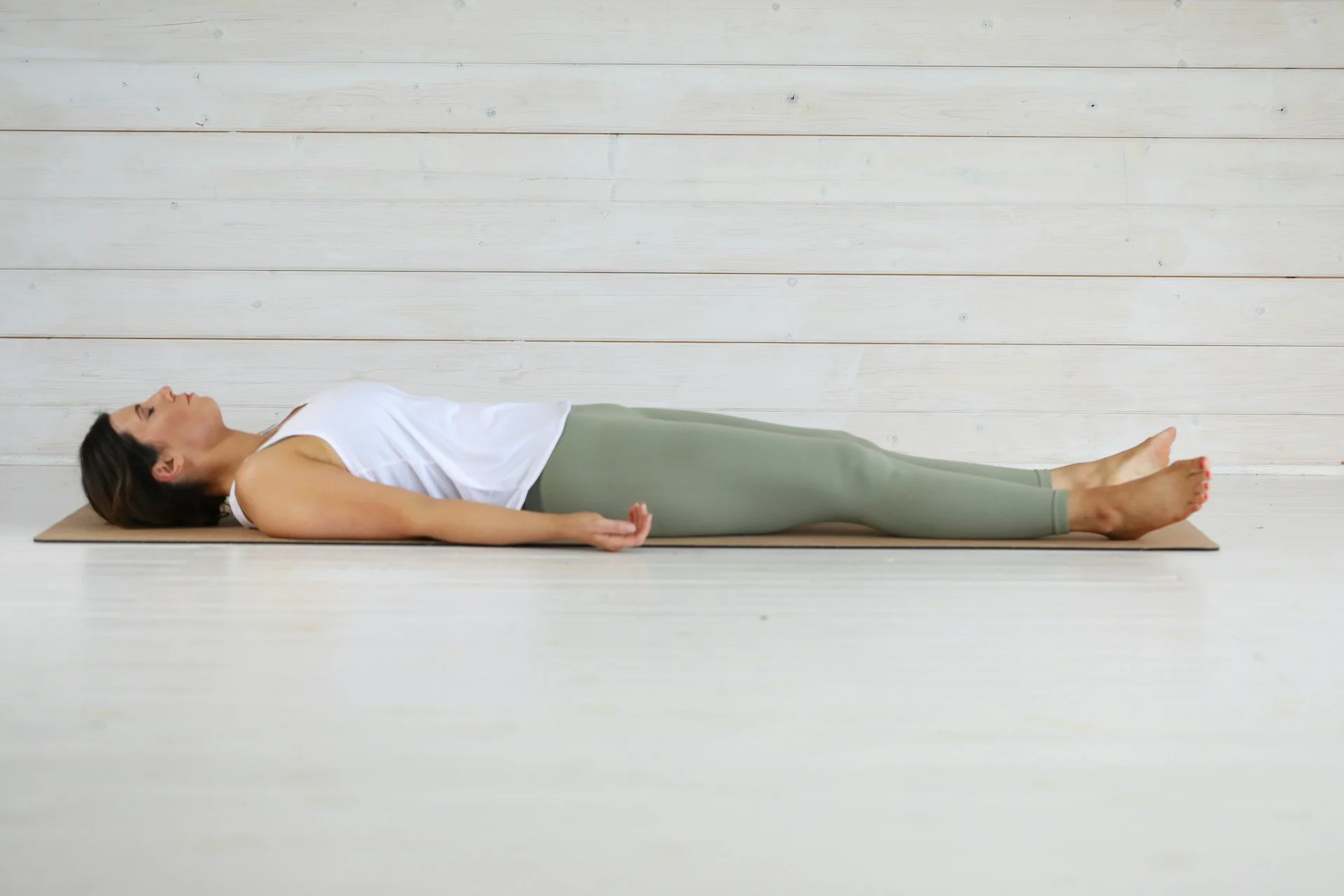
At this point in time, what is often needed is non-verbal connection with your body. Your body needs support in assessing that it is safe and can turn off the sympathetic nervous system and threat response in your brain and move into a parasympathetic state with the full power of your rational part of your brain online. This can look more like following body impulses to roll around on the floor, shake, sway, punch the air, stomp around, or simply hug and squeeze yourself. When you show up for your body through its language, which is through posture, movement, and gestures, it can hear what you're trying to say that it is not in danger and not alone. Feldenkrais is a somatic practice of gentle movement to increase range of motion and flexibility to enhance emotional regulation.
Quoted from the Feldenkrais website, Moshe Feldenkrais has said, “We move according to our perceived self-image.” By moving in different ways, you can start to update how you perceive yourself. I chat today about the connection between a Feldenkrais practice, food behaviors, and body image with Beverly Atkins.
Beverly is a Guild Certified Feldenkrais Practitioner and the founder of Pauseture, a mobile app that makes Awareness Through Movement lessons accessible through guided audio sessions you can do anywhere. After years of working in high-performance environments and struggling with regulation and food, she initially discovered the method to help with back pain. But what she found went far beyond that—these somatic movement lessons changed her relationship with her body and with food, without relying on restriction or willpower. Her work focuses on helping people move out of autopilot and back into learning mode, so the brain can reorganize movement, behavior, and patterns from the inside out.
We chat about the impact of movement on body awareness, navigating body image and self perception, cultural influences on body image and how the practice of Feldenkrais can support in updating your experience of your body, how to shift focus from appearance to sensation, and understanding food behaviors through movement and nervous system attunement. The doors to the Somatic Eating® Program are officially open!
As a reminder, this is a three month live class. You receive weekly classes, somatic resources, bite sized explorations to practice between classes, 3 somatic community meals, and unlimited support in between classes in a private group space. The next class starts on May 21st and you will learn how to decode your body's messages through your food coping behaviors like binge eating, restriction, yo yo dieting, chronic emotional eating, food noise, and body image struggles. We will chat about the nervous system, trauma, attachment and developmental processes that all contributed to your current day eating patterns and how to update your body that it no longer needs to rely on these food patterns for safety. You can click on the link in the show notes or go to somaticeating.com to learn more and sign up today. Now, welcome Beverly!
I am really excited to have you here today, and we were chatting before we pressed record of just how many modalities are within the field of somatics so I'm excited to hear what you have to bring today, just to continue to expand people's awareness of how many different approaches people can play with when we're talking about the field of like somatic psychology. And as we just get started, I'd love to hear a little bit more about your history and how you got into the work that you're doing today.
Beverly Atkins 05:20
So I had a very complicated relationship with food, going back even farther than how I got into this work. I was overweight as a child, and I did my first diet maybe about the age of 10, and for decades, yo yo dieted, and I was either all in on a diet and restrictive or I would give up. And what I didn't know until, actually, a couple of years ago, even after I got into the Feldenkrais Method, is that I had undiagnosed ADHD for years, and so looking back, I believe the brain wiring of my ADHD explains a lot about my relationship with food and how that has impacted how I've been foraging. I found it very interesting when I learned the hunter gatherer theory of ADHD brains that were always foraging for food, and I was like, oh, this makes so much sense. In my 30s, I discovered running, and hyper focused on running. I did three marathons in 18 months, which led to triathlon, which led to doing Iron Man Hawaii. So I managed my weight through extreme exercise. And in order to burn a lot of calories, you have to run a lot. And so that dominated my thinking and moving for a long time, and in 2014 I was working at Facebook, and I put my back out, and I was absolutely terrified for many reasons, but one reason was I managed my weight through exercise, and I could not even walk, let alone run, and I tapped into the various modalities I had tried for back pain. Nothing was working as fate would have it. I was going to a health and wellness resort for vacation, and I literally crawled into a movement lesson called Feldenkrais, Awareness Through Movement. And it was the only class on the course descriptions that I thought I could do, because the description was, lie on the floor, make slow, gentle movements to improve your movement and posture. And I thought, I'll give this one a try. So I did my first Feldenkrais lesson, and I was told to close my eyes, not look at, there were going to be no demonstrations on how to do the movements, and don't tempt myself to open my eyes and look at the way other people interpret the movement directions. So this was so completely unfamiliar to me, because I had done yoga for years and being left to my own devices and moving what feels comfortable for me was absolutely foreign, even though I had five years prior to this day, I did an Iron Man. I was using my body to achieve something I was not sensing and feeling my body at all, and it was the first time I slowed down and started to pay attention, but I still didn't feel anything. But I stood up an hour later, and my back pain was completely gone, and I was so deeply curious what could have possibly happened. And it took me many years to understand what happened, but I just knew it happened, and I felt really good. So every day that week, I went to another class, and every day it was a very different class, and every day I felt even better. And what happened next had absolutely nothing to do with back pain. It changed my brain wiring, my relationship with food, my relationship with others in such a dramatic, different way.
Stephanie Mara 09:27
Thanks for sharing all that. I was literally like, smiling and nodding along as you were sharing all of that, because this is, like the power of somatic work is we're getting in touch with, like, the body's way of communicating and talking. And it makes me think of even my experiences of Authentic Movement, where you were like, oh, this is really different. Like the direction was okay, I'm gonna put on music and then move in a way your body wants you to move. I was like, what? My body wants me to move in a particular way. What do you mean by that? Like it's just such a different way of moving and being in relationship with the body that giving the body a voice. And I'm curious, like what you felt changed, or what was happening for you as you started to get in touch with maybe this non verbal communication.
Beverly Atkins 10:25
I want to comment on what you said about the turning the music on and dancing. So my whole life. I mean, this first lesson was I was 47 years old, so this was a lifetime of disassociation with my body, and if I would get an invitation to a wedding in the mail, I was like, oh god, there's going to be dancing. I remember when I was 40, I was working in a sales role that we would take clients to concerts to entertain them, and we were in a suite, and I was attempting to dance, and a very rude colleague said, nobody wants to look at a 40 year old woman try to dance. And it wasn't that nobody wants to look at a 40 year old woman. Nobody wanted to look at me dance because I had absolutely no connection to music. I was so disassociated. And today I love to dance like a song is on and I understand what I missed out on. It's so sad to think about it, but I missed out on that. I was like, people don't really enjoy dancing. And when I danced, I would mimic I would look at other people on the dance floor, and I'd be like, oh, they're moving their arm that way, so I'm gonna move my arm that way. I didn't feel it at all, and it has taken some time for me to really feel that. So I love that you brought that up, because I don't think I've ever shared that before.
Stephanie Mara 11:56
So yeah, I mean, what I really hear you reiterating is just how much when we are in kind of a dissociated or collapsed state in our nervous system, for someone to ask us to move in a way that resonates with us or to feel into, you know, our quote, unquote intuition that is so hard to do because the body is literally in a survival response, or we're not even in our body because we are just trying to survive the environment, or learned that we have to survive the environment. What I really hear you bringing in is this sense of compassion that we have to approach this somatic work with, because it does take time and repetition in the time to be on the floor with our eyes closed like you were and be like, I'm not going to compare my experience to any other body's experience. And what I found, even in the practice of Authentic Movement, was it actually needed to start really small. Like, sure, if I looked around the room, I would see, like, because I did this in graduate school, like my cohort members like moving wildly in their bodies. And I'm like, huh? Like, okay, that's interesting. Don't know if I feel the impulse for that, but for me, it would be, like, gentle swaying. It would just be like, okay, what's it like to, like, move my finger up and down, you know, and then I started to maybe get more impulses or feedback from my body. But I find there's this expectation that it has to look a certain way or be this really big thing. And I think social media also contributes to that. Like, sometimes I see these, like, yeah, I see you shaking your head, like these somatic release sessions where someone's like, shaking and sobbing, and I'm like, hmm, okay, yeah, sure, that can maybe sometimes happen, but oftentimes the work is a lot more subtle. I don't know if you've also experienced that.
Beverly Atkins 13:54
Yes, I have, and I think that having taught public awareness through movement classes and seeing how everybody interprets it and moves differently. And you're right, it's the small and the subtle is where the big changes are unlocked, but often when you're new to the method, and you're so used to going fast and big that maybe that's your nervous system, and that's what you need to do today, and over time, it adapts to going smaller and slower. Let me just share a little bit, giving the framework about the Feldenkrais Method. So the Feldenkrais Method, there's two modalities within the method, and one is working one on one, with a client or with a student, with typically hands on lessons, and those lessons are rooted in functional movement. So we often clients will come because of pain. They want their pain to go away, but we root the lessons in functional movement, so improved walking, improved reaching, improved sitting, and the first thing we do is we find safety and comfort. So the nervous system is we're we are creating conditions for learning, and the first condition for learning is creating to the nervous system that it's safe, so finding a safe and comfortable way, and really the benefit of seeing a practitioner is we regulate our nervous systems, and it's why the training program is a four year training program, 800 hours over the four years, because you can't really just flip your nervous system to moving that slow and that that subtly overnight. For most people, it takes some time. And so we regulate our nervous systems, and the one on one work, we say it's a dance of two nervous systems. So the benefit of working with a practitioner is we will go slow and smaller than somebody would if they're left to their own devices, and they feel really, really good. And then in addition to that, we have the Awareness through Movement classes, which is the class I crawled into. And traditionally, that's a group lesson where the teacher gives instructions and you have self directed movement. And when I would teach public classes, I would see some people going very big and fast, and even I would think we're not corrective, but I would think this person's not getting it. I'm never going to see this, this is going to be their one and only class, because they are not understanding the subtlety of it. And always that was the person who came up to me after class and said, that was life changing. I can't believe how good I feel. And it was the person who came back repeatedly so looking at somebody and saying, you're going too big or too fast. That's what their nervous system needs today and over time, we now know with modern neuroscience that it is the smaller, the slower, the subtler movements that really create the biggest neuroplastic changes in your brain. So over time, we want to go smaller and slower, but if your nervous system isn't ready for that, you're really just going to feel agitation and frustration. So for me, my ADHD brain, I had tried breath work and meditation and body scans in the past, and even the traditional Awareness through Movement classes, some people teach it with really long body scans, and early in my practice, I felt nothing but anxiety and irritation. I needed to be moving and I could focus my attention and my awareness with movement, if I was still I just felt irritation frankly.
Stephanie Mara 18:01
I completely agree with that. When I think back to just my history of moving through binge eating, and I think when I first started to practice yoga in response to my food behaviors, it was very, very supportive, but I was often drawn to faster classes, to classes where there was more flow. And then when I started doing my master's degree right at the beginning of and I've told this story before, but right at the beginning of my studies, the binge eating had disappeared for a few years, and then I finally started looking at the trauma that had kind of sparked the binge eating to begin with. And so it resurfaced, and it came back. And I was like, okay, okay, we're going through this again. And initially, I agree with you. It wasn't a matter of meditating, like I couldn't go back to the things at that time that helped me previously, I couldn't sit down. And I like to explain this to people from a nervous system perspective, it's like you're telling your body to sit down in front of a tiger, and your body's like, what are you doing? Why are you just sitting here? The thing that helped me the most at that time was I had to put on really loud music, and I lived by myself at the time and kind of wildly dance around my apartment, roll around on the floor, jump off of my couch, and just like allow myself to match the energy that was there. And there is actually, I don't know if you've heard of Stanley Keleman. He created, like, Formative Psychology in the somatic realm, but he created something called the Bodying Practice. And his theory was that when we're feeling intense things, we have to match the intensity that's there, not try to calm it down. And in learning that, I was like, okay, what if I actually didn't try to always, like, calm myself down in this intense binge eating feeling I was having, what if I actually tried to match it, and that was the thing at the time that ultimately supported me in starting to feel like I could move through the binge urge cycle. I'm curious, because I know you do a lot of work in, like, just the body image realm, if you've seen how Feldenkrais maybe supported individuals in moving through like these, maybe body image concerns that come up or, like you said, you also have a history with food, or moving through these urges that maybe come up with food.
Beverly Atkins 20:30
Two things. So Moshe Feldenkrais talked a lot about self image, and he talked about masking, similar to the way people talk about ADHD putting a mask on for others. And when he did hands on work with people, and today we do this, we asked people to wear their everyday clothes to a lesson, not put on a gown or, you know, yoga pants. He wanted you to show up as your authentic self. Because what he saw was when people came in and were treated, they would feel better, and then, if they changed their clothes to go out the door, their old self image came. So this method is about integrating and noticing your self image, and so many of us have masked for so many years. You look at culture, how body types there is a trend. Like, how can a body type be a trend? When our body type is our body type? How do we notice it? And so the way we approach it is with neutrality and being almost an observer to your body. So it's moving with awareness and giving your body attention. It's not oh, that's good or oh that's bad. It is just huh. That's interesting. When I push through my foot, my pelvis lightens a little. That's an interesting connection. So I think to be able to say, oh, you need to love your body, that brain wiring does not exist. It's a neural pathway too far to cry. It's a bridge too far to cross. We can't go from, for me, I hated my body for years, and then I used my body for achievement, but I never slowed down and felt it and to ask me to lie down and love my body, this method is more about just giving it attention and paying attention. Does it like to move this way, or does it like to move that way? And there's no good or bad in how you respond, which is why it's helpful in a class to tell students to close their eyes, because in my training, the majority of the people in the class were former professional dancers, the way they moved was not the way I was going to move. And so that constant comparison that other modalities have this really honors slowing down and sensing, but it's a neutral giving attention to your body without it being good or bad, just noticing.
Stephanie Mara 23:25
I love that. And something that it made me reflect on as you were talking was also this idea of how much we mask as a culture, especially for women that we are struggling with, the way that our bodies look. We all know it. We talk about it. We talk about how toxic diet culture is. But then when it comes to admitting, like, oh yeah, I still have moments that I work through that I don't always like, look in the mirror and like, love what I look 24/7, 365, days a year, like, there's kind of this masking that occurs that we feel like we have to maybe hide that journey. I'm curious about, like, the sense of shame that perpetuates that with all of these movements, like, so important, and I've talked about that here as well, of how important body positivity movement was, or, you know, other movements that came out of that to try to accept or love the body, but it does kind of, what I've seen even with people that I work with, increase this sense of shame of shouldn't I be there yet? Shouldn't I already love my body, but I love what you're pointing out is that it's not a bet, a matter of continuing to focus on the external appearance. When we're trying to create a relationship with the body, we have to shift the attention to what does it feel like to embody and exist in this being, so that you get to know the body from the inside out, rather than maybe the outside in.
Beverly Atkins 24:52
Completely. And so I finished my Feldenkrais training while I was still working at Facebook. And just before the pandemic, I resigned, because I knew this is what I wanted to be doing, and I knew I wanted to get this method to more people, and just saw the value in it. And my goal was always to build an app and just make the lesson...I worked at Facebook. My brain was wired to build things for scale, for as many people as possible. And so I had this idea for a long time, like we just need to package up these lessons and make them accessible. There's not enough teachers in the world teaching this, and it deserves to get to more people. And my mentor said, you really need to open a private practice and work with people to understand how this method helps people. So I completely back burnered the idea of building an app and opened a private practice in the middle of a pandemic. So initially I was working with people online, and then I was working with people in my backyard, with, you know, triple masked. It fundamentally changed me profoundly, and I'm grateful to my mentor to telling me to slow down and do this, because it changed me in a way one, to have empathy for every person who walked in, no matter how different of a person it was, and having our nervous systems regulate. I had a profound moment in one client lesson where I truly felt our nervous systems were one, and it shifted me forever in my everyday relationships outside in the world. Like every person I encounter, no matter how much their beliefs may be different than mine, I slow down quite a bit to try to understand how I relate with that person. So it was really life changing for me. In that way, it also was life changing for me because I had battled my weight for my whole life, and a large amount of my clients who came in to see me for chronic pain physically looked perfect, and the old me would have been envious and said, this person is so beautiful and so just Instagramable person, and frankly, some of my clients were models and influencers. And I always thought if I could just be that thin and that beautiful, all my problems would go away. And I got to meet these women who were thin and beautiful, and they were in chronic pain, and so they had been doing modalities that helped them to look really good, and they were also nutritionally, they were undernourished, and so they were not taking in the food that we need to be strong. It really shifted my envy for you know, who I thought was naturally thin. Now we know that, you know so many people are battling through restriction and not taking in the nutrients they need, and it really helped me to profoundly let go of caring what society thinks about people's bodies completely. And I think we now know today, the people who are setting the standards for what's culturally beautiful are people who want prepubescent young girls, and if that's what we've been striving for, that means we have to starve ourselves. And I just had such a profound shift when I saw traditionally beautiful people in a lot of pain, that it's something I think I just finally let it go. You cannot know what somebody's going through by how good they look in a photo or a video. It does not tell the picture. And so this method is really about as unfamiliar as it is for us, finding what feels good for us.
Stephanie Mara 29:24
I love all of that, and what a powerful shift you're talking about in that really we have been kind of sold this belief that a certain body appearance will provide something, and I don't want to diminish that. We do still live in a culture that has thin privilege, and we do still treat different bodies, unfortunately, in different ways. We still have a lot more work to go and to do to just see a body as a body, and it is just expressing itself in the world as it is meant to of whatever our history or life experiences, our context, our environment. There's so many different reasons why our body expresses itself in different ways, our genetics. But what you're also naming is kind of dropping the facade of what we've been taught. And it's like, actually, there is no body appearance that can guarantee anything. There is no research that even shows that only certain body types experience certain symptoms. So when that gets to fall away, I find that it's like, oh, well, then how do I want to feel in my body? I know that was a shift that happened for me when I stopped worrying so much about trying to make my body look the way I was taught it should look, quote, unquote the biggest shift for me was I want to feel like I can be present, like I can feel energetic, like I can feel alive and vibrant, and what's going to support me in feeling that way and that body external expression has changed, actually, many, many different times ever since I started practicing that because what makes me feel that way has changed with every decade that has passed, because our bodies change and need different things. So yeah, it is such a process that you're talking to to come more internal with the body. And I find it is really hard these days, especially when everything is maybe pulling our attention outside of ourselves again to look at what other bodies are doing.
Beverly Atkins 31:44
I love that you said it's a process, because for me, I was doing these lessons for back pain relief. The goal was not to change my relationship with food or to lose weight or to look better. I was solely doing the lessons at the end of the week at the resort, the teacher provided 24 lessons for me to do at home. And I did those 24 lessons with the goal of, I'm doing these to keep the back pain away. But I really fell in love with the process of doing the lessons that I needed to do them before I went to work in the morning and showing up more regulated and coregulating with others, and I was sleeping better. And then over time, I can't remember at one, it was definitely a process. But at the end of the 24 days, I repeated those same 24 lessons. But the regulation, you know, this was before I had the term nervous system regulation. I was just like, I'm feeling good. I'm going to do another lesson. And when I repeated the lessons, they weren't as powerful as when they were new and curious. So what I intuitively knew early on in my practice, it was the novelty, because what these lessons do is they take us off autopilot and put us into learning mode so we can create new brain rewiring. So if you are doing the same lessons over and over, there's a diminishing return, because it becomes like an exercise, you're like, oh, and whether it's conscious or not, your nervous system is going, I know where this is going. And you shift back to autopilot. And when you have a brand new, novel lesson, the brain is really fired up for change. And so I became a hunter gatherer of these lessons, and they're not cheap to buy. It could become a very expensive habit of buying and finding free lessons and so, but I knew I needed the novelty of the lessons, but I was loving doing the lessons for the moment of doing a lesson. It wasn't homework, it wasn't with goal oriented of I'm going to do this to regulate my nervous system. This is the 30 day nervous system reset. It is the process of enjoying the curiosity of the movement. And then within months, I worked at Facebook, the amount of free food offered there is really challenging for anybody who has a difficult relationship with food, and I, even at one point, had seen a hypnotherapist for weight loss, and she and I talked about this. She's like, I'll tell you what I can't treat with my hypnosis is free food. There's something about the brain when it's free, it's really hard to say no to it. And she talked about how clients who were traveling and were in a, you know, first class lounge, and they would do really well, but then suddenly free food was offered, she's like when it's free, it does something very different to the brain. So here I am working with you know, I had to run a lot in order to work there, and over time, my goal was not to lose weight, and I had stopped running. I had stopped all forms of exercise, because my free time was now invested in doing these lessons, and over time, I just started noticing how food made me feel instead of how food made me look. So when whatever decadent dessert was offered up, I would look at it and instead of having willpower and saying, no, no, I can't do that. I won't fit in my pants if I eat that. It was, how am I going to feel an hour after eating that? And I went, yeah, I got a meeting in an hour. I can't eat that. And I really started to tap in to how I felt, and I really let go of how I looked, and I started eating for what made me feel better, and so my choices became more about the cashews or the almonds or whatever I knew would stabilize my blood sugar, and it wasn't a conscious effort. So I love that you said it's a process, and it's not on a 30 day timeline. It's we're all different, and I can't even tell you exactly when that shift happened, but the shift happened, and I just noticed I no longer had willpower or restriction. I just could look at food and say, I know I'm not going to feel good if I eat that. And just started making better choices.
Stephanie Mara 36:39
Yeah, I love what you're bringing in, because very much in this whole realm of somatics and nervous system, like, I think of it more as a nervous system attunement now, rather than regulation. Every time I hear the word regulation, I think of like, you know, I got a monkey wrench, and I'm like, trying to tinker with my nervous system. That's always like the imagery that comes to me. So it's more like, okay, can I connect and attune to what is happening in my nervous system so that I can support my body and my nervous system and whatever it's perceiving or what it's reacting to. But I love what you're pointing out is that when it comes from a place of curiosity, of like, I wonder how this might feel, or I wonder what might happen if, if I get on the floor and I start slowly moving my body in specific ways, I wonder what might happen. It doesn't then feel like this work that you're doing that I feel like a lot of times these like somatic or nervous system, they're put out as like, tools of this, like, here's a tool you can do to, like, regulate your nervous system, and then suddenly you're doing it. And you're like, why isn't this doing anything? I've had a lot of people come to me recently feeling like they're doing all the things they think they should do when they start getting into somatic or nervous system work, but it doesn't feel like it's working for them, and I find that often it's coming from a place of actually misattuning with yourself. You're doing the shaking because you were told that shaking would be helpful, rather than maybe paying attention to actually what your body needs is to get into bed and lie down, just as an example. But there's this different felt sense that I hear you describing, that when it comes from let me just deeply listen and notice how I respond to this, and then even meet that response with curiosity. We're more in the unfolding of what our experience is, rather than cognitively putting on our body, what our experience should be, if that makes sense.
Beverly Atkins 38:43
It does. And the culture of demonstrating, I have received, people will subscribe to our app and they'll cancel, and we have a, you know, tell us why, and the answer is, somatics should be demonstrated. And there were no demonstrations. And so there somehow this culture exists that has, I don't know the full history of somatics, but I know with yoga, it's typically demonstrated. And as I mentioned, no demonstration was really difficult for me, but it's the listening. I also, frankly, do not like live classes, because the history of disliking my body, I've never wanted anybody to look at me and so to go to a live class. I liked going to live yoga classes, but this particular method, I liked doing it in the privacy in my own home, because I could really be curious and exploratory and weird in whatever way I wanted without thinking is anybody looking at me thinking I'm doing it wrong, because I'm truly doing it to find the pleasure in how I move and feel. It's pleasurable, but I'm not seeking pleasure. I'm just thinking the awareness and the attention that my I didn't give to my body for decades, and it's just awareness, intention, and then you explore what can feel better, what can feel better? And a lot of what I'm seeing online is very performative and demonstrating, and it's frustrating for people to not have a video demonstration. And I cannot tell you how many people have said to me, I will never subscribe to your app because I'm a visual learner and I am not a good listener, and well, I wasn't a good listener either, and that's a very fixed mindset of I'm a bad listener. I'm not a good listener yet. And this may take some practice, and it may take a pause and a rewind, or repeating the lesson tomorrow, or just lying on the floor, moving however I feel at the moment, but it's the culture of being okay with not knowing where it's going and not doing it correctly and doing things that are weird and different. And it's a huge culture shift, and it's a tough sell, for sure, because people want to perform and do things right, and it's really about getting comfortable with just being playful.
Stephanie Mara 41:28
I was thinking the exact same thing as you were describing all of that, of how much sometimes our reactions to somatic work is actually kind of the work in and of itself, because it is mirroring back to us our internalized beliefs that maybe we have learned about what an experience is like supposed to be like, we're supposed to know, we're supposed to have the answers. You know that there needs to be like a linear trajectory to something, whereas what you're describing is somatics needs to be met with a lot of curiosity, and sometimes you're not going to hear anything at all. And it is literally maybe staying with the pulsation of the body that is happening, just lying there and being like, okay, well maybe I can feel my fingers throbbing with the blood moving through them, or I can feel my heart just going, bump, bump, bump, and like, that's still something that's happening, and I may not have any kind of impulse that's coming to me. What if I just stayed with this? And I agree with you that it can be really new and really uncomfortable because of how much you know, especially just like, where we are in the world right now, I think a lot of people's nervous systems are more in that sympathetic fight or flight response, because we're constantly receiving like cues of threat and danger all the time externally. So you ask someone then to slow down and just be with an unfolding of their body, and that can be really hard, like we kind of been naming throughout our call today, of sometimes we actually have to be more in that rigorous movement, because that's just meeting ourselves with where we're at and what we need in that moment. But yeah, there is kind of this slowing down that may eventually occur, of what's it like just to be with myself and see things just naturally unfold. And I am curious, this has been kind of bubbling in my brain as you've been talking if you can provide an example of what even happens in a Feldenkrais session, just so individuals can maybe get an idea. And it can be exactly what I even just described. And I know it's going to be unique every single time to every single person's body, but I know that it can feel really hard to grasp where I know that some people might be like, well, then what am I doing?
Beverly Atkins 43:45
The traditional classes are, it's across the board, and Moshe Feldenkrais' early work were very big and very physical, and as he honed the practice over years, it became smaller and more subtle, and a lot of the lessons can be very still, and some of them can be so incredibly nuanced, and a lot of the movements are based upon early childhood development patterns, so rolling, crawling, and we're really getting your nervous system back to what the millions of years of evolution have led us to do. And I think some of our most powerful lessons are crawling lessons. And we have a crawling series in the app, which, if I ever I have aches and pains, that's 100% my go to. But some lessons are more nuanced. Now, what we did after I built the app, because as I started talking to people about it being a help for improving focused attention for ADHD, we added a filter to the app that you can search for either subtle or still lessons. So if you're already in a regulated state and you want to still very super nuanced lesson, and your nervous system is ready for that, you can search for a still lesson. If you know still is agitating for you, you can filter for an active lesson. Many of the lessons are, we ask you to move your limbs, but really, and it took me years to understand this, what we're really doing is we are moving your spine. We may not mention your spine at all, but as you tilt your legs to the right and tilt your arms to the left, you're actually doing a subtle spinal twist. And if you think about a lot of people are talking about the vagus nerve now, and definitely simply rolling your head can activate the vagus nerve and put you into a rest and digest mode. But if you think of your spine as a nerve super highway. So we have trillions of nerves in our body, and there's, I think, a couple dozen nerves that run along the spine. And by thinking about your arms and your legs, we're actually it's a very sneaky way to subtly move your spine around, which is breaking up the nerve endings all through your body, and so that is a important part. I think, of the lesson is getting the spine to move. And I think there's so many modalities right now that are so focused on perfect, upright, firm posture that people's spines are not flexible and movable, and that not only can lead to pain over time, you've got to move your spine to stay out of pain, it is also deadening those nerve endings for sensory awareness and for feeding your brain. So what you can expect in the more active lessons are waking up your spine by moving your limbs. But again, I'm cautious to get too technical, because I also think there's so much beauty in just experiencing the lessons for the process and not the achievement. Because if you're doing the lesson, and you're thinking about the spinal superhighway of nerves it's too much information. You don't need to know that. You just need to know you're moving and feeling better and being curious about what could be happening.
Stephanie Mara 47:34
Yeah, I totally understand that. It's a really interesting experience to like teach somatic work, because automatically, when you are talking about physical movement, we are listening and interpreting with our brain. We are not actually embodying the information until we stop the verbal portion and actually get into the body to notice what is there and how it is responding. So if you're going into a somatic practice with this idea of things we've been talking about today, this might decrease my food behaviors. This might make me finally feel comfortable with my body's appearance. This might make my pain go away already it's being approached from a cognitive lens that you might miss out on how it feels or what subtle shifts or movements might need to happen as you're doing the movement specifically in your body. So I love that you paused there and you were like, okay, so yes, here's what is maybe like in the neuroscience realm, what is potentially happening. And there is this somatic experience that is happening in your body when you do this, and only you are really going to know what that's like. Like sometimes I find I've been noticing more and more in kind of my programs. And the one on one work that I do is when someone's like, oh, I'm trying to describe this, and I can't, and I'm like, you know what? I don't actually need to understand. So the only important thing is that you embody it and you feel it and like you know what's going on inside of yourself. We don't have to tack the language onto it if it feels like it's not coming for you, because I find then we're trying to take an embodied experience and put it into language which can be supportive to sometimes feel like, ooh, I got the right exact words to describe what it was that I was feeling. It can be helpful. But sometimes the words, we need more time to let even the words come to us, rather than trying to like, find the words to describe it or expect some outcome from the experience.
Beverly Atkins 49:43
Words can be so limiting to how we feel, and I think often I'm incredibly nonverbal after a lesson, like words don't come out of my mouth after a really good lesson, it's just I'm in it, but I feel very blissful, and feel very one with the universe. The lessons are great for interoception and noticing how I feel, but it also as I get up I feel how I fit in with the world, but to say that out loud is such a disservice to that type of feeling, because we were moving bodies long before we were talking bodies and having this type of language, and so just tapping into the feeling and being okay that there's there may not be words for what you're feeling. It's a practice. I mean, when I was in my training, the teacher would say, how do you feel after a lesson? And I'd say, good. And she'd be like, do you have anything more to share? And I'm like, I just feel good. And you know what? I'm okay with that. I miss when I was just feeling good, and now I have so much language around what's happening. Lately, I have been exploring new lessons I've never done before that are not even in our app. And I'm like, oh, I love going back to this, just doing it for the process of enjoying it.
Stephanie Mara 51:07
I feel like we could talk for a whole another hour, but I know we're nearing on time here, and so I'm curious. We've talked through so many things today. I'm wondering just a baby step that you would offer individuals who are listening and maybe they're fascinated with maybe getting into some Feldenkrais work, where would you suggest for them, or even anything that we explore today, something that's maybe accessible for someone to start doing even in their own homes right now?
Beverly Atkins 51:37
Well, I think something you can do on your own without ever even doing a Feldenkrais lesson. What I didn't touch on a lot today is it's all about doing the non habitual. You will naturally retrain your brain by slowing down by doing the non habitual and getting off of autopilot. And an easy way to do that is using your non dominant hand when you typically rely on your dominant hand, because that will automatically slow you down, and that will automatically give you the differentiation for your neurons to go, what's going on, what's going on here, and to build new neurons. So when you're brushing your teeth, to brush with your non dominant hand. When you're eating, eat with your non dominant hand. So just begin to slow down and have awareness when you reach for a cup on the top shelf, can I do it with my non dominant hand? And just start to get out of auto pilot that we're all programmed to be on autopilot and shift into creating a condition for adapting your brain in new ways. And I think that's a simple, easy, baby step. If somebody is interested in exploring Feldenkrais, there are really good practitioners out there in live classes, whether they're on Zoom, you can go to Feldenkrais.com and you can search for practitioners or live classes there, and then, hopefully an easy way to affordable way for you to explore the method is, I've made this app. Its name is Pauseture, because it's a little bit of a nod to posture, but you're taking a pause, so it's P, A, U S, E, T, U, R, E, and we have a seven day free trial, as I mentioned, I just wanted to launch the app and just have a lesson appear and be curious, but we had overwhelming feedback that people wanted structure, and so we do have a 21 lesson intro series which gives you different types of both movement and nervous system regulation classes, and give you a sampling of our different teachers within the app. We have, currently, we have 10 different teachers in the app. I do not teach in the app. I'm just trying to bring the best teachers out there to students to sample an experience. And then we have, at this point, about 365, lessons. So if you understand the novelty and you're curious each day, there's a different lesson in there, and there's no 30 day program, and then we upsell you for more. It's all just one affordable because my mission really is to help as many people as possible, as affordably as possible. So I've put the last couple years into building this app and making the lessons accessible, and now the 21 lesson starter series is a great starter way to sample.
Stephanie Mara 54:44
Amazing. first I love the baby step that you offered, because our bodies and our brains do love to be in automatic pilot mode, and so anytime that we can try to do something differently, also in what I heard you of the examples list was in things that maybe aren't as activating, like reaching for a glass with a different hand. It's not in, like, the most intense nervous system moments. It's just like, oh, what would it be like to maybe, you know, reach for this thing, or open the door or write with a non dominant hand, will start to kind of bring in more of those pauses to be like, ooh, what's that like for me? How am I doing right now? So thought that was fantastic. And then, yeah, I mean, you're doing such important work in the world, just to, you know, offer these practices and incorporate it in everyday life. And so I'm glad that you talked about your app. I'm curious how else individuals can keep in touch with you and the work that you're doing.
Beverly Atkins 55:49
Right now, everything is focused on Pausture. So we have a Instagram handle. You know, if I were to do things differently, I may have started with my name out there more. Full disclosure. I never wanted to be in this chair having these conversations. I thought I would be this mysterious. I'm not comfortable being in the foreground. And I actually tried hiring people to effectively play the part of me, and that seemed pretty inauthentic, so that I realized was a pretty bad idea, and then I just realized I need to start having these conversations, and I believe so much in it, but my goal was always to be the person behind the scenes, and nobody would know who I was. But I do realize people don't want to buy from companies. They want to buy from people. So I'm getting my face out there, but I don't have any public facing me out there, but Pausture is 100% me and my vision of what I'm trying to bring to the world.
Stephanie Mara 56:57
Well, I will put all those links in the show notes, and I loved our conversation. I'm so glad that you're here and you're doing this and you're sharing your wisdom. It's a really big deal, and I'm so glad that you reached out so that we could share your wisdom with the world, which is really important. And I can feel your passion for this work, and you have so much to offer. So I just really appreciate your time here today.
Beverly Atkins 57:20
Thank you so much, Stephanie. I am just in awe of what you're doing and your generosity and sharing the space to have the conversation. So thank you so much.
Stephanie Mara 57:31
Absolutely. Well to everyone listening if you have any insights from this episode, support@stephanie mara.com, email me anytime, and I hope you all have a satiating and safety producing rest of the day. Bye!
Keep in touch with Beverly:
Website: https://www.pauseture.com
Instagram: https://www.instagram.com/pauseture/