
How Embodiment Heals Attachment Wounds and Creates Secure Relationships
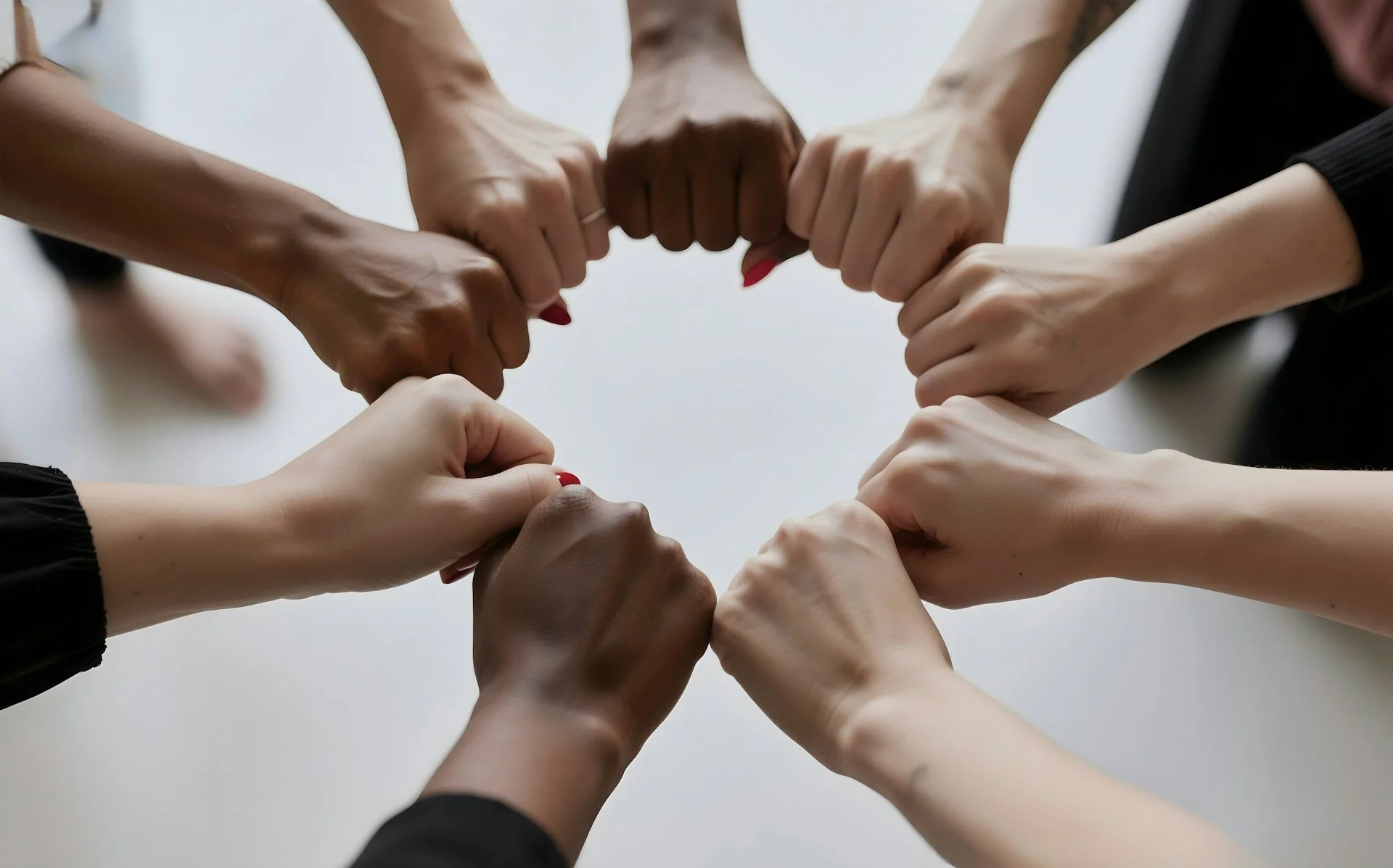
Welcome to the Satiated Podcast, where we explore physical and emotional hunger, satiation, and healing your relationship with your food and body. I'm your host, Stephanie Mara Fox, your Somatic Nutritional Counselor. Something I have seen over the years is that how you relate to one thing is often how you relate to everything. So the relational wounds you experienced in childhood can also show up with food. This is why I feel it is crucial to understand your attachment or relational traumas so you can better understand what may have shaped your current relationship with food. Others have sometimes joked with me before that they think of me as their food couple's counselor. And the truth is that many of the approaches and resources that are out there to support you in your human interactions can also support you in your food interactions as well. This is why I wanted to bring on Orit Krug onto the podcast. Orit is a Board-Certified Dance/Movement Therapist for over 15 years. She's guided 5,000+ people from 20+ countries to shift deep nervous system patterns from trauma, so they can experience the deep, fulfilling love they desire — without sabotaging or pushing it away. Orit now focuses exclusively on retreats, where people often experience shifts in days that they’ve been working toward for years. Her approach integrates somatic practice, nervous system regulation, and relational work—supporting participants to notice protective patterns as they arise, stay present with them, and shift how they respond in real time. We chat about utilizing dance movement therapy for attachment healing, somatically reparenting the inner child, the importance of coregulation, understanding attachment styles through body sensations, practices for feeling and moving through emotions, and creating secure attachment.
The doors to the Somatic Eating® Program are opening next Tuesday October 6th for those on the waitlist. If you're new to the Somatic Eating® Program here are a few details: The Somatic Eating® Program is a 3 month live class that combines everything I’ve learned from almost two decades in the field of food and body image recovery Classes are 1.5-2 hours every Thursday at 5:00 pm ET beginning October 29th-January 14th (this means I will be there for you every step of the way during the holiday season in moving through every food and body image experience) All classes are recorded so you can watch the replay You'll walk away with a greater understanding of your food coping behaviors like binge eating, restriction, skipping meals, emotional eating, and food noise You'll receive somatic resources to practice in between classes to slowly grow your capacity to inhabit your body and ride the wave of food urges and impulses You can ask questions and receive support in a private group in between classes If you're on the waitlist you will also receive a limited time only $300 off.
You can join the waitlist at the link in the show notes or at somaticeating.com/waitlist-somatic-eating. Now, welcome Orit! I am so excited to have you here today and to talk about attachment. And for those who don't know you and your work, I'd love to just get started around you sharing a little bit of your history and how you got into this work that you're doing today.
Orit Krug 04:20
Yeah, thanks so much for having me. My name is Orit Krug, and I am a board-certified dance movement therapist, licensed creative arts therapist. Those are just my credentials, but I have a huge personal journey in all this. I experienced complex trauma growing up, and I also, at the same time, danced a lot in my local studio, and pretty much just realized over the years that that was my safe place-the only safe place I had to be in my body, express my feelings, and my journey just kind of unfolded in a way where I felt my soul calling me to help other people through somatic movement, dance, healing trauma from the root, and knowing personally and professionally after doing this for over 16 years that talking can only get us so far. I'm coming here today still in my own attachment healing, and I continue to be surprised at how long it takes and how many repetitions it takes. So, while I have a lot of professional experience, I also I'm excited to share my story as it is in progress.
Stephanie Mara 05:43
Thanks for sharing all that, and also just your honesty and how long this takes. I so resonate with that in growing up in an environment that also kind of left me with some insecure attachment, it's not like it just magically goes away, even when you get into safe relationship or friendships, it still gets kicked up and activated. And I'm so excited, first of all, around your background. And surprisingly, I don't feel like I've had a ton of dance movement therapists on here, which is so funny because that was basically my cohort going through my own master's degree was we were split into the dance movement therapy track and the body psychotherapy track. And along the way, I always thought I was like, ah, should have done the dance movement therapy track. It was like I love the dance movement therapy work. So I'm first curious if you could talk a little bit more about your lens on attachment, and also how you've seen dance movement therapy be a different approach to that.
Orit Krug 06:53
Yeah, it's a great question. There are a lot of resources out there on attachment. You know whether it's anxious, avoidant, etc. and they're very cognitive based advice. And I also think that we tend to, especially with anxious attachment, get stuck in overthinking. It can feel like such a cognitive experience. Although I'm sure if anyone's listening and they have experienced this anxiety, it's so body based too. So my approach is not just somatic; it's also relational. And I've shifted everything in the way that I help people in the last three years. I do retreats only in person because the relational process is crucial. We can do a lot of somatic work through the screen or at home or even one-on-one with a therapist, and there are benefits to all of that. But to be in a space with other people, and I do also women's only retreats, which has its own power who are coming for a common purpose, have had trauma and attachment wounds that they've been carrying for so long, and embody healthier ways of relating, not just through the whole retreat experience, but also through the dance movement therapy somatic experiences, which I can give some examples about. That seems to be a real game changer for people. I did a video interview with a recent participant who said she had never experienced that level of love and acceptance in a group, and she actually experienced that in her body. That when she went home, she carried that home with her, and it stays with her because you can tell yourself every single day, I am loved, I am worthy, people love me. People care about me. I mean, I've done this so many times, but it's the embodied experience, especially in relationships, that sticks with you. Like you know what it feels like to be loved and held, literally. And your body is the vehicle for which you experience the world and feel. And once you have that experience, you carry it with you, and you can build on that too. Like, oh, I know what it feels like to be truly accepted and loved without judgment. I experienced that with 10 other people for three days straight. Now I know what it feels like to not feel that way too. So you can kind of use your body and the felt sense to find more of what you really need and want.
Stephanie Mara 09:50
Oh, that's such a powerful example. I'm curious because you said you could give more, but I completely agree with you that. Our cognitive understanding can only take us so far, and we have to viscerally feel in our bodies what safe relationship could actually feel like. I think about it like for a lot of individuals who come to work with me in their food struggles. If you've never had a safe experience with food, how are you going to know how to create that if you don't even know what that would feel like in your body? So I hear in some of your work that with these retreats that you run, actually being able to feel in your body what safe relationship actually feels like so that when you're back in your regular life, you can reference now kind of the somatic memory of what you now know that it could feel like in relationship.
Orit Krug 10:52
Yeah, and I love that you brought that the relationship with food because we have relationships with everything, including and especially ourselves, you know. So whatever the anxiety is about or the disconnection is about, for people who are listening, this this can apply. And I had a recent personal discovery that may also resonate. It's pretty huge, and I've been dancing around it for a really long time. But it's like I finally felt it land in my body, and it's that I have been outsourcing my worth my entire life. I've been building structures and habits, including my fitness and my eating, around trying to prove that I am worthy and enough, and that I matter, because I've been calling it a job. Like my parents had this job to do, which was to provide me that security. Every child, you know, we're not born with security, we form attachments in the first two years of our lives, and those crucial two years is where our caregivers do whatever they're supposed to do, so that I can grow into a healthy attached adult, and I don't have to work so hard to believe that I'm worthy or that I matter or have such anxiety over being forgotten, and I've known for a while that I have been anxiously attached in relationships, specifically with men. Although it used to be a lot more in every relationship, but something has clicked deeper where I I see it in all parts of my life, like I want to have the best body, so I'm gonna go on a cut and work out really hard. And if I have the best body, or if I look the best in the room, then I'm gonna matter. It was a hard realization because there's a lot of anger and a lot of grief over if my parents did this job, then I wouldn't have spent now 37 plus years doing it, and it's so much harder doing it now. And I think I just I felt inspired to share that because the wound is not getting that, and we can move around our lives, putting band-aids on the wound, using the external things, food, and social media, and reassurance from partners. Not that all reassurance is unhealthy or anything, but we can use that to just keep making sure the wound stays at least kind of protected. I mean, it's so much self-protection. Or we can start being like, okay, no one else can fill the job. That's the real big grief. No one else has been able to do this job for me, and I have to do it myself. And I have to, I mean, we can go into what that really feels like and looks like, but I have to not abandon myself now.
Stephanie Mara 14:07
Yeah, that's such an amazing example and like really powerful experience where something just started to click and land, and that's a perfect example of how we can get it in our mind, but until we feel it in our body, sometimes there's just not forward movement with something until the two are online together. And thank you for also naming that. You know, I always like to take the lens of with attachment and food that often food can become a replacement for secure attachment because it can be this consistent, reliable entity, and it can go for the same thing that we create any structure, ritual, routine around with our body image or food because it becomes this thing we can rely on, just like we need to rely on a parent to show up consistently and regularly, so I am curious to hear more what that actually looks like. Because you just named something that I would love to dive further into. That I I think a lot of people I work with on this moment as well when you realize no one else can do it for you now, and then this big anger comes in where it's like I don't want to be the one to do it. I wanted my parent to do it. I want someone else to do it. So I'm curious if you could say more about moving through maybe the anger or honoring the anger and like what that path looks like to start to be the parent that maybe someone always needed.
Orit Krug 15:45
Great question. I'll give an example for what this looks like somatically in a relational setting because I think that part is so important to re-experience or to repair this and have new experiences with people where it's not just about feeling the anger, although that is something that I have to teach my clients a lot-just how to feel in the body. I find that with myself and most of the people that I work with, yes, we have to learn somatically how to feel the anger and trust ourselves that we have the capacity to feel and move through it without rejecting ourselves, and that's the biggest piece. Is how badly do you make yourself feel for having the anger, and then what do you do, and how much do you withdraw from relationships, not let love in, punish yourself, beat yourself up. Like that feels like the biggest injury, because if we could just feel our feelings, we would experience them as waves that we can feel through our bodies, and they do pass. All feelings pass if we don't mess with them very much. It's the shame, and it's will I be accepted? Will I be loved if I let people see me like this? So, at one of our most recent retreats, it was an all-women's retreat. We went to Yosemite Park, and we did this one exercise where you can picture a group of 12 women in a circle, and one person at a time named their deepest fear, and then everyone else in the circle would embody their own interpretation of that. So this is really powerful because suddenly there are 11 other people reflecting back different versions of your deepest fear, and you're you're just seeing mirrors all around you. And this one woman named Melanie, she said her fear was being seen as I truly am, and even just saying that her body was just uncontrollably trembling, and saying that and being seen in it sent her into this very anxious activation. So she was sitting next to me and sitting on this chair, and her feet were lifted about four feet from the ground. She's shaking; her feet are lifted, and I asked her if she could put her feet on the ground, just one step at a time, and while shaking, she did. And then I asked, this was on one of the last days, so the women had formed some pretty strong bonds, I asked her if she could make eye contact with someone she really trusts in the room, even if she trusted more than one person. It could just be one person, and she did. And then, what I do at the beginning and throughout all my retreats is we come up with these group mantras. So some of them from the last retreat were discomfort isn't danger, and another one was vulnerability is strength. And there were a few more. We repeat these mantras before every session, and so then I ask the entire circle to repeat vulnerability is strength, and you just suddenly hear these beautiful, soft, loving voices all at the same time saying vulnerability is strength, and then she finally stopped shaking. She looked up, looked around the whole circle, and started crying. It was this huge release, and the wave passed. It was so intense, so much, so much shaking. You could see her body just really, really panicking, and the co-regulation and the mirroring, and her having this experience of it is okay and it is safe to be seen as myself. That is a huge foundation. Now she can trust that she can feel anger or express it in relationships, and that she could feel it inside of herself. She had another experience of this wave the next day too, and it just a similar story of us all being there for her and her having the capacity to be with those feelings.
Stephanie Mara 20:18
Oh wow, that is really potent, and I like could feel the trembling even in my own body. Like I know what that feels like. Everything in you, again, it doesn't have to make logical sense, feels so activated because you are sharing the thing that you keep to yourself that no one else hears except for maybe a few people, maybe just your therapist, but like to share to a whole group of individuals is really powerful. And what you're also naming is just the importance of whatever it is that we're looking to change or alter in the way we show up or how we want to heal has to be done in relationship. Like I don't think there's any healing journey that can be done where at some point you have to put yourself back into relationship because it is the interactions that happen with other people that yes they can be traumatizing but they can also be the thing that heals us as well.
Orit Krug 21:20
Yes, exactly. Yeah, and that's why I wanted to start there because I can give tips at home, and I think they can be helpful. But if I just say, well, make space to feel your feelings, that can be near impossible or feel very difficult for those of us who experience a lot of trauma, and our only available coping skill was to disconnect from the body and to numb and escape. And I can say all day, make space to feel, but if your nervous system doesn't feel safe to do that, we need some kind of foundational trust that we can feel, and we're going to be okay. We're going to survive it.
Stephanie Mara 22:08
Yeah, absolutely. Now, if someone is kind of unclear, just going back for a second around if they have anxious attachment, how does that express itself? Because I think there is a lot of the mainstream idea, and I love that you were like we have this cognitive idea, but then there is the embodied somatic experience of attachment. I'm curious if you could say more about that, and even like things that you have found of like different styles of attachment.
Orit Krug 22:39
Yeah, and I think that I intentionally wasn't going to list all the things that you could find on the internet, right? There's the overthinking, ruminating, you know, making stories, but it really is such a embodied nervous system experience. The attachment, whatever attachment style you are, it's feeling that sensation, those sensations in your body that you know. If you are, if you tend to have anxious attachment and you tend to cling, it's like everyone's going to feel this differently. But it's like that whole body experience of, for me at least, the floor underneath me is gonna fall unless I cling to you, and I can feel like I'm gonna float in space and never come back. It's hard to put words to it because…
Stephanie Mara 23:37
Yeah, you're describing it so well with your body.
Orit Krug 23:41
Yeah, without even looking.
Stephanie Mara 23:43
Like even just the you reached out with your hands and grasped the air, and I like felt that just that grasping of like, please just stay was what was coming up in my body as you did that, and then just the floating in air, your arms were out just in space of just like yeah, you feel like you are groundless without this other person staying and existing as a part of your life.
Orit Krug 24:09
Right. And there could be more of the avoidant attachment patterns where you could feel suffocated. It could feel hard to breathe. You could feel this overwhelming, trapped feeling when intimacy gets to be too much, or you're you feel like you're being asked too much. And I think we can name a lot of different things, but I think the foundation of the attachment stuff. And again, you named it right. It could be attachment to food. You could be thinking about food in a certain way all day, planning, rehearsing, not knowing. That's a big part. Is the not knowing whether you're in an attached relationship with a person or food or something else. It's like even social media would say it's not just the dopamine hits that make it so addictive. It's like I have to know what's going on. Maybe I can find something that confirms my worth in this world, and I'll also probably find something that's triggering. And the ability to rest and feel safe in not knowing and an ambiguity has been a huge game changer because I'm going in a few different directions. I think one is whatever we're overthinking about or ruminating about or make preparing for whether it's food or I'm preparing for a conversation that hasn't even happened yet, all of this focus in the mind and the ruminating is a self-protection strategy for just being in the body, and it can feel so scary being in the body and in feeling all that grief and that anger and that not feeling worthy sensations that ruminating and questioning and overthinking, though it's extremely exhausting, is more familiar and feels more safe. So I think whether we're talking about anxious attachment or avoidant attachment, trauma, anything, if you are primarily functioning in your head, then you're probably protecting yourself from being in your body. And why? You know, we can start to question why.
Stephanie Mara 26:34
Yeah, I love those questions. You know, what it makes me think of is how often, again, because of social media, we have all of this different guidance and advice about relationships and what's okay and what's not okay and what's a green flag and what's a red flag, and it all just keeps someone in their head. And then it can be kind of that age-old exploration of like, you know, is it intuition or is it fear or is it really that like you feel smothered by this person, or that your avoidant attachment style has been activated? Is it really that like you think this person's going to leave you, or is your anxious attachment style being activated because something feels familiar from your past? And it is really hard work because, like, what you're naming is it's such a somatic experience to have these things. Like, I don't want to diminish that it's real what is happening inside of your body-the panic, the overwhelm, the shutdown-and that you kind of named, can we grow that capacity to be with that-that you can slow it down for yourself for a second to be like, okay, what's really going on here? Is this really about the other person, or is there something coming up and happening within me?
Orit Krug 27:53
Yeah, and I would go a step further, and something that I've been practicing recently and sharing with my clients is all those questions that you named. I think they can put us even further in a thought spiral. And I faced a lot of questions in my own head of like, are they mad at me? Should I text them and find out? Am I really feeling what I'm supposed to be feeling? Am I ruining? You know, it's just oh my god, so exhausting. And so, anytime you have a question, especially one that you're ruminating on, you can take a breath and on the out breath say, I don't know, and you can practice this over and over again. And it's okay if you catch yourself, you know, five minutes down the questioning process, but as soon as you catch it, you take a breath and you say, I don't know. And when I started doing this, I had a lot of sadness come up. All those questions were just protecting me from feeling my deeper feelings. Sadness, again, sadness, anger, grief. I feel like those are the big things, And insecurity, and not feeling solid and secure in myself, and I think this is a great way to stay with yourself. And I do, you know, you asked about the different attachment experiences. I think that the main experience that is beneath all of it is abandoning ourselves, abandoning being in our bodies, abandoning our feelings. I find a lot of challenge with some somatic teachings where, while well intentioned, it can make people just go back into their heads. What am I feeling? Where am I feeling it? Is it moving? How is it moving? Am I feeling it here now? You know, and it's just like it defeats the purpose. Yeah. So, and that's been just one of the biggest things for me is like you said. These feelings are so real. I mean, I would have nights of being up all night, just unable to calm my nervous system. What's wrong with me? Why can't I just relax? Like I just want to be able to sleep, and I wasn't staying with myself. And now, if I'm worried that I'm activated and won't sleep, the other day, I heard myself saying out loud, I'm very into parts work and you know re-parenting the inner child. I said, I will stay up with you all night if you can't sleep, and I think that's what we need to do for ourselves: is re-parent our inner child, inner children, be the parent who didn't stay with you for as long as you needed while you were feeling your feelings, you know, maybe you had a parent who said to get over it, or you're overreacting. Be the parent who stays up all night with you if you can't sleep without making you feel bad at all. Be the parent who does tell you that your feelings are real, your experience is real, and I'm not going anywhere. Once I realized that, the deeper healing really started. You know, a lot of the women who come, the people who come on retreats, they have an idea that when they come, they're going to let go of something, and they're going to release something that will help them. Whatever their goal is, whether it's to feel more secure in relationships, to have a healthy relationship with their body, to feel home in their bodies-you know, whatever their goal is, most people come with this idea that they have to release something. And once we get into the parts work, you know, adult me and little me, they realize that most people are rejecting this younger part of themselves. That is what it like little Orit is: I need love. I need you to show me that I'm worthy. I need you to tell me that I matter. I need you to remind me over and over again. And yeah, I wanted to quiet her down for a long time. Like I'm just, I'm just like, come on, girl. Like you're fine. You just move through it, which is yeah, which is exactly what you know my experience was as a child, and everybody I would say pretty much everyone by the end of the retreat realized that I need to listen and be with and support little me. I don't need to get rid of anything. I need my adult self needs to work with my little self. We're on the same team. We want the same things. We're just doing different things and behaving in different ways to try to get it. Adult me says it's the right way is to speak up, you know, gracefully for what I need, and obviously that's important. And little me is like I don't know, begging for attention in some way. They both want the same thing, and we need that. We need to stay with our whole selves in order to feel whole.
Stephanie Mara 33:13
Yeah. Oh my gosh, so many amazing pieces in that. First, I love that you named this isn't a matter of like fixing the inner child. Like you didn't meet your inner child in a way that was like, okay, you're having a hard time sleeping. What do we need? Should I give you some milk and cookies? Do you want some magnesium? Do we have to take some? I don't know. Drink some tea. Like I just heard you be like, yep, validation. This is what's happening. Acknowledging it, and I'm here for you in this. And I find that we don't really have a role model for what just acknowledgement, validation, and presence could be that sometimes even our responses. I don't know if you've also experienced this to the inner child can also be like what you named our own internalized parent because we parent ourselves the way we were parented. So we try to fix them. We try to get them to be different. Or how can I make this better for you? Or kind of positive psychology and gratitude are way out of it of like you're okay, I believe in you, which like sounds great, but it's not actually showing up for what is. So I really appreciated you naming that and giving that example. And the other piece that I'd love to hear more of your thoughts on. I personally am tired of the lingo of let it go, like you know, just that whole idea that we're gonna let something go, and I don't know necessarily if we ever really let something go rather than. We learn how to hold space. We grow beyond. We transform. But I don't know if we like let something go where it's like, oh, I just have to leave this behind. It's a part of you. It's a part of your history. And so I loved and appreciated that you named of really some of the journey, the word I'm going to use is like ownership. Like own the parts of you, own your history, own what you've been through, own how you've coped. Because then, if it's yours, there's something for you to do something with. But if you are just trying to let it go, then it's never yours to do anything with. You just have to find some way to like disown it.
Orit Krug 35:40
Yeah, I never found that that was effective to try to let it go. I think you can let things go, like they can just kind of dissolve. They don't have as big of a charge anymore. But that only ever comes in my professional and personal experience is after we fully see it. Why do we experience anxiety in our bodies? Your heartbeat could literally feel so strong and be loud when that when you you know if you meditate and you close your eyes and it's quiet, you hear it. It's like my body is speaking to me. It wants to be seen. This part of me wants to be heard, and it, trust me, I've tried a lot to try to just be like, you know, move past that and rush through it. I think maybe some people can let it go, but probably there's a lot of us who just aren't finding that.
Stephanie Mara 36:38
Yeah, I liked your imagery of dissolve. You know that it's not something you have to actually like, I'm gonna throw this into a lake, and it's never gonna come back, but more that it something just dissipates as you live it and you breathe it and you move through it that it's just not as loud and present in your everyday life anymore.
Orit Krug 36:58
Yeah, and I want to go back to what you said about fixing, because I think this conversation does feel abstract and like, well, how do you do that? Like, how do you stay with yourself? And I want to come back even different somatic practices. That whenever I work with people, I do a whole lot of foundational work where I guide them to feel sensations in their bodies, and constantly reminding them without fixing, without trying to make them go away, without judging. If you feel, let's say, we're doing some some work where we're feeling a sensation in our bodies, I'll give an example so that I could make it as clear as possible. But with the embodied parts work that I do, I have people imagine first an adult, a wiser part, a higher part. It could you could name it anything, and imagine what this version of you looks like if you could picture this version of you on a movie screen in front of you, how is this version of you moving and holding yourself in your body? And then I invite people to actually try that on, and their bodies like an outfit. And a lot of people do take up more space. They extend their arms out. They lift up their heads just slightly. They're taking deeper breaths, and I have this anger in this higher part. And then I ask them to imagine a younger part of themselves and see that version of you on a screen in your mind's eye. What does version of you look like? How are you holding yourself in your body? How are you interacting with the people around you? How old are you? People usually get a number immediately, and they have a very strong image of this time in their lives. And now try that on in your body, and there tends to be a lot of similarities in people, you know, making their bodies really small and curling over, and usually a lot of tears, like really feeling this younger part of me that when I work with them on retreat, they're feeling them in their bodies this deeply for the first time, and I think a lot of that is because people don't know. We're not taught how to do this, and even if we were taught, we don't necessarily have the safe spaces to go there. You know, to go to that place where you're you're falling apart in a as a younger version of yourself. And I'm constantly reminding to just be with be with this younger version of you. This is what they wanted all these years ago, and this is even what your adult self wants. Just like we all just want to be seen, loved, accepted as we are. To know, like that, I think creates the foundation of feeling worthy and safe and cure in this world, like I can be myself. I can be free. I can express myself, and I'll still be loved.
Stephanie Mara 40:09
Yeah, thanks for sharing that process. Because yeah, sometimes I find too that when we're talking about healing attachment style, it can become intangible, sometimes a little esoteric, and to actually ground it in like here is what the practice is, and here is how you might embody both your inner child's pain, but also their resilience, and like how you want to be in relationship with them, I appreciate you bringing in more of the embodied work in this because I do find that it's really missing in the attachment recovery field because it has been so cognitive based of we just figure out what attachment style are you and then you know now we just like give you things of like how to navigate that, and this sense that you're going to be like just stuck there in that attachment style for like the rest of your life, which is not true whatsoever.
Orit Krug 41:11
Yeah, and another piece with that exercise is I bring it to partner work, where with the person you're paired up with, you move as your younger self, and the person across from you responds as their higher self, and no words, just movement. And it 99.9% of the time, it ends up in long holds, long hugs, tears, just getting the holding we never got. Like I really witness people being held for as long as they need, in whatever way they need, for the first time in their lives. It's such a deep need. It's such a deep human need to be held and seen. And there's a smaller version of that, or an alternate version of that, you can do at home. You know, it's obviously not the same, but we're not doing this to fix ourselves or to fix our feelings. But when you're activated, maybe you can give yourself two minutes, three minutes, you know, whatever feels like okay. This is my capacity, and you could set a timer too. Just like drop everything else, let the timer just go off for as long as you set it, and before distracting yourself or trying to fix the problem, or right asking those questions and like, should I do this? Should I do that? Try to just sense where do I feel this in my body, and again, not to go too much in the mind and analyze it, but just where do I feel it, and if this feeling could move, how would it want to move? Maybe your chest wants to curl inward. Maybe your arms want to push something away. There's no right or wrong, and I'm going to say it again. I'm just going to sound like a broken record. This is not to try to release the feeling or make it go away. It's to be with it. It's very different, and we're not trying to make these sensations disappear. We're just letting our body finish a conversation that it's been trying to have, and the more that you do this, the more that you see that these feelings do move naturally, and they even if you're in your most intense activation and it lasts for a long time, you probably have experienced and you will experience that it comes to some sort of calm. Think of all this in waves. It's a wave. It's a long wave. It's a really intense wave sometimes, but it is a wave. And if we can just be with it without like just trying to force it or push it away, it will, you know, dissolve or the wave will crash naturally and probably a lot more quickly because you're again your body's just asking to be seen and accepted and loved.
Stephanie Mara 44:10
Yeah, thank you for the reminder of like the point here is not to try to make it better, which I know like I don't want to diminish anyone who's listening like, of course, you want to feel better, but feeling quote unquote better is connecting with ourselves in our actual lived experience, regardless of maybe how uncomfortable or intense that feels. Sometimes I remember when I started to move through really big binge urges, I remember kind of having the experience of I'd rather be feeling this than continuing to dissociate from myself. Like I would rather be feeling the intensity of this experience of my aliveness of this difficult moment than continue any more moments of my life not being connected to myself anymore. It is a process to feel like it's worth it, and that you have the capacity to move through it. But I just appreciated you naming that. That some of the work is feeling what never got felt when you were younger, and it's still here, and you can still move through it, and maybe feel differently in your body, and I also love that you named that you might move through it a lot faster than you think you will, because it's really only I feel like cognitive protection, or from a parts work perspective, might be protection from a part of us that tells us it's going to be here forever. If you even let it in just a little bit. You're never going to get over it, and I just find that that's protection from actually just feeling the thing. I don't know if you felt that too.
Orit Krug 45:28
Yeah, and back to what you said, you just want to feel better. I totally understand that, and whatever. I'm just going to say it. You will feel better if you feel your feelings. Like you will feel better, even though it feels hard at first. Like that's why I'm here saying this because I did go through most of my life protesting against feeling it, trying to give the job to anyone else but me to make me feel okay, and you will come to a point where you just realize it doesn't work. So whether you need to come to that point yourself first, or just know that it's going to happen anyway, you know, it's feeling those feelings is the only way through. You just build so much capacity and trust that you know everything that you're afraid of, you can actually not just survive it, but thrive through it. And the rewarding feeling, like feeling so proud of ourselves for getting through something that we didn't think we had the ability to do, that's so healing in itself.
Stephanie Mara 47:03
Yeah, so well said. I'm curious. You've given so many amazing little golden nuggets today. You know, I always like to wrap up with a baby step that people can take to start practicing some of this work in their own life. And you actually gave a lot of really wonderful examples already. So I'm wondering if there's any last little baby steps that you might offer anyone who's maybe realizing, oh, I probably need to be connecting with this inner child a little bit more, or being the parent I always needed, and how they might start doing that for themselves.
Orit Krug 47:37
When you spoke about your binging urges, and I related that to my experience with having urges to text or check my phone for texts, and whatever the urges that you're having, I think it's, if possible, worth feeling that in your body first. Like I could literally feel the urge to text in my hands and my fingers, and just reaching for the phone. And maybe it's a breath. Maybe it's just just one moment at a time. Like, can I take a breath, one breath at a time, and just feel instead what's going on in my body, and just slowly build capacity from there. Like I'm feeling this tingly, uncomfortable sensation in my fingers. Like I just want to reach for the food. I just want to reach for the phone. Can I feel it instead? And it's pretty similar to what we've been talking about. But maybe now I feel that sensation traveling up my arms, and maybe by the time it gets to my shoulders, I have this desire to squeeze, hug my shoulders, and you know, it's I would say just one moment at a time. Even if you have an urge and you stayed with it for five seconds instead of going right away, you can just gently increase your capacity. It does get easier. I found this pretty helpful with, again, reaching for reassurance. The more I stopped reaching, the more I discovered what was underneath that need, and it was to feel secure and worthy. And the more I actually felt myself and saved myself through those urges, the more I felt secure because I knew I wasn't going to abandon myself through that.
Stephanie Mara 49:32
Yeah, thank you for sharing that. Yeah, I really hear you just kind of describing how to somatically show up for it. You know, find the body part that this intensity is happening, and you said it earlier, I say this too, set a timer if you need to. It will be like if it's a second, if it's five seconds, like any amount of seconds that you sit with that, are more seconds than you did before, and you know, finding a way to kind of give that a voice. So I so appreciate just all of your wisdom and everything that you shared today. How can individuals keep in touch with you and the work that you're doing?
Orit Krug 50:08
You can visit my website. It's my name, oritkrug.com. So if you're interested in joining a retreat and diving deeper into this work, you can find all my upcoming retreats on my website, if you want to start smaller, I also have some courses on Insight Timer that are listed on my website too. So that'd be great, and we can absolutely connect if you'd like to work together.
Stephanie Mara 50:33
Awesome. Well, I will put all of those links in the show notes, and just thank you so much for your time and your wisdom and your expertise again, and sharing it here.
Orit Krug 50:42
Thank you so much.
Stephanie Mara 50:43
Yeah, well, to everyone listening, if you have any insights or aha moments from today, email me at support@stephaniemaron.com anytime, and I hope you all have a satiating and safety producing rest of the day. Bye!
Keep in touch with Orit Krug:
Website: https://oritkrug.com/
Instagram: https://www.instagram.com/orit.krug/